Free Delivery & Return
 365-Day Returns
 10 Million Happy Customers
 500,000 Products in Stock

The Ultimate Armchair Buying Guide: Find Your Perfect Match
Reviewed by the Beliani Content Team · Updated November 2026
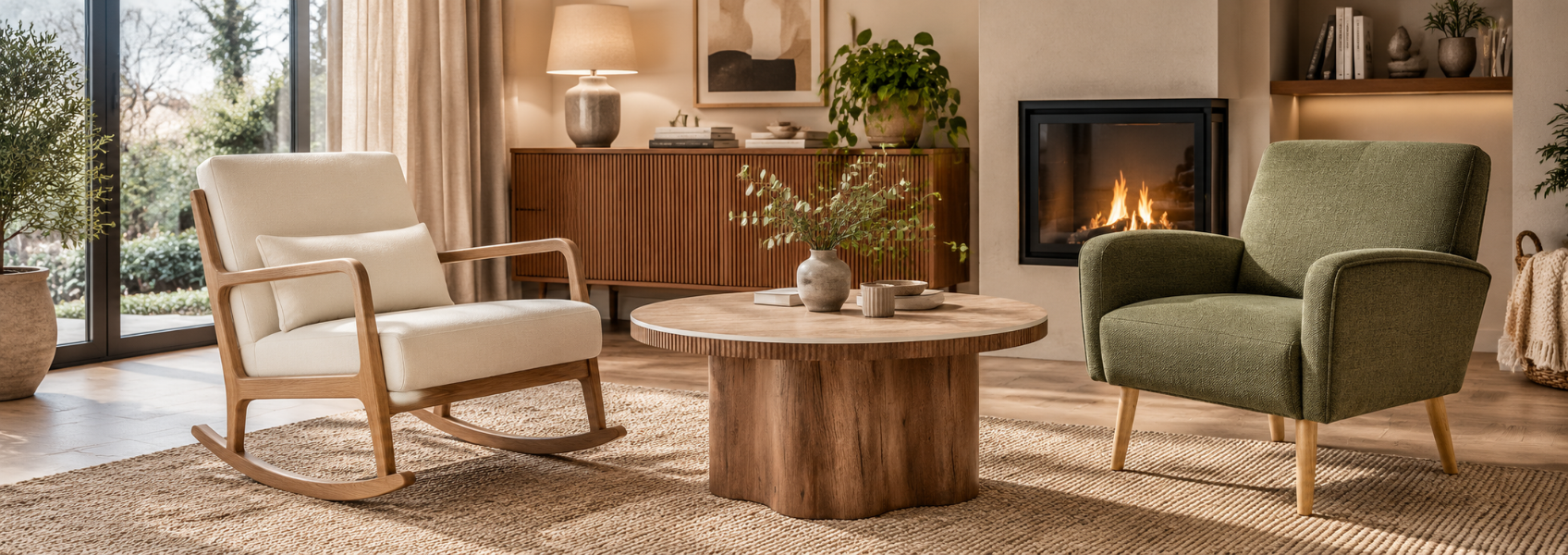
Unless you’re trying to rule the Seven Kingdoms, sitting down shouldn't feel like a punishment. An armchair is the unsung hero of the house - your official base camp for morning coffee, doomscrolling, or giving the sofa some much-needed backup. But because it’s your primary command centre - for post-work winding down, reading, or watching "just one more" episode - a bad choice in height, depth, or fabric will betray you faster than a plot twist. Choosing the right armchair isn't just about fitting your décor; it's about finding the throne that actually fits your body.
In short
What size armchair should I buy?
Most armchairs measure 70 to 100 cm wide and 70 to 95 cm deep, with a seat height of 40 to 48 cm, which keeps the chair compact enough for a living room while still giving a stable, supportive seat. Oversized wing chairs and recliners sit at the upper end of this range or beyond it, while compact chairs sit at the lower end. Check the chair's footprint against your floor plan, and add extra depth behind a recliner or swivel chair so the mechanism has room to move.
- Available floor space and how much walkway you need around the chair
- Whether it reclines, swivels or rocks, since each needs extra clearance
- Who will use it most, since seat depth should suit their height
Shop now: armchairs
Which armchair style suits your living room?
Armchair styles differ mainly in how the frame is built and how the chair moves, and this affects where it works best in a room.
Wingback and tub chairs
Tall side wings and a fixed frame give a formal silhouette that works well beside a sofa or in a reading corner. A solid hardwood or plywood frame under the upholstery generally holds up to daily use better than a softwood frame.
Swivel armchairs
A rotating base lets the chair turn towards a television, a window, or a conversation without moving the whole piece, which suits a spot where the chair needs to face more than one direction.
Recliner armchairs
A backrest and footrest that extend together suit anyone who settles in for long periods, though the mechanism needs genuine clearance behind the chair to open fully. A closed recliner usually measures around 80 to 100 cm wide and 90 to 100 cm deep before accounting for that extra space.
Rocking armchairs
A curved or pivoting base lets the chair rock back and forth, which suits a nursery, a reading nook, or anyone who finds gentle motion relaxing. Check the floor space it needs at both the front and back of its arc, not just its resting footprint.
Material is a separate decision from the frame style above: a wingback, swivel, recliner, or rocking chair can equally be covered in fabric, eco-leather, velvet, or rattan, and a natural rattan finish does not make a chair outdoor-ready unless it has also been treated for weather resistance. When comparing styles, also weigh the chair against furniture it will sit beside, since a tall wingback can look heavy next to a low, modern sofa.
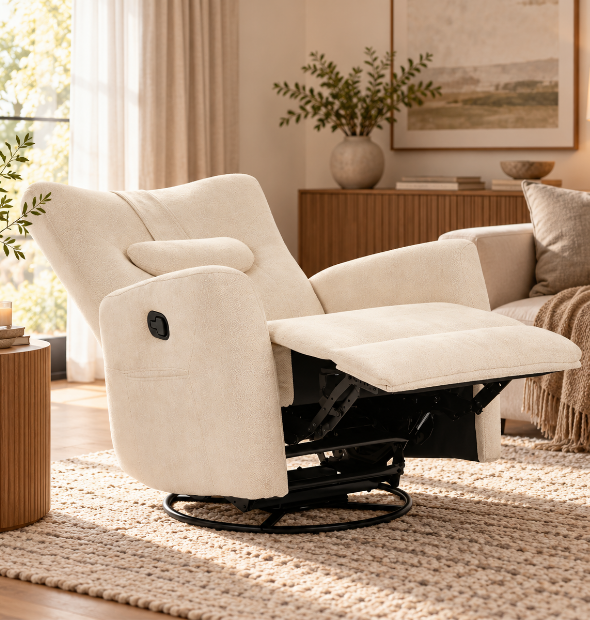
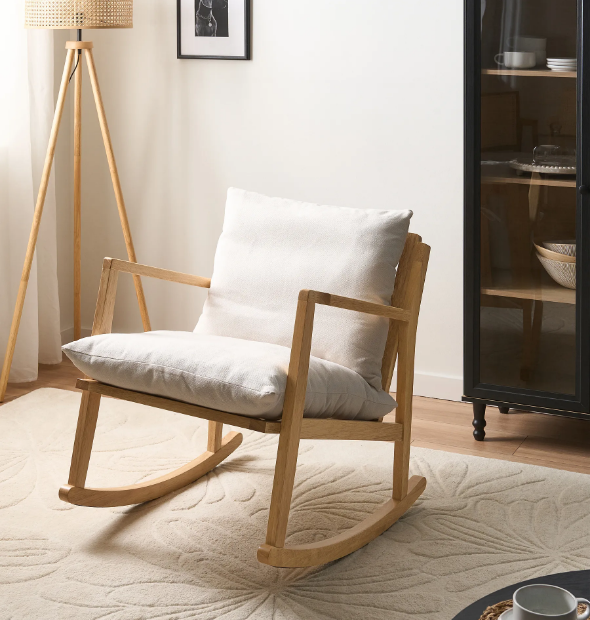
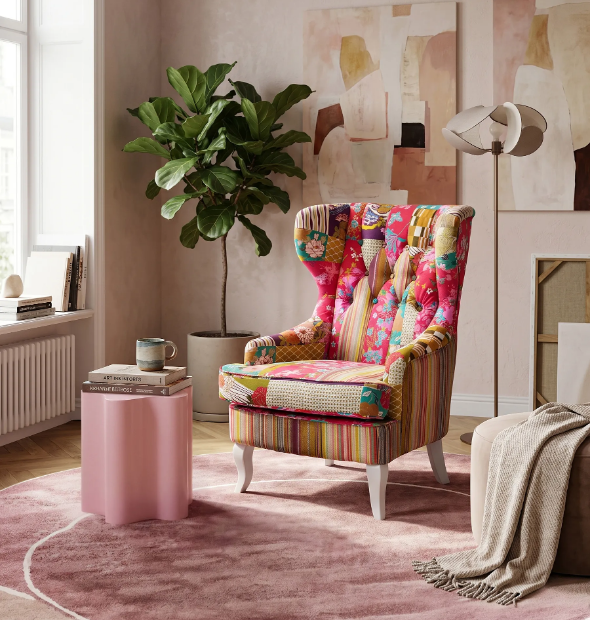
Three armchairs, many features, check now
How much space does an armchair need?
Beyond the chair's own footprint, leave room for people to walk past it and, if it reclines, swivels or rocks, for the mechanism to move. Keep at least 70 cm of clear walkway around the chair so the room still functions once the chair is extended or turned. A simple way to check the fit before ordering is to mark the chair's width and depth on the floor with masking tape or newspaper, then leave it in place for a day or two to see how it affects movement around the room.
Clearance for recliners and swivel chairs
A standard reclining mechanism needs roughly 30 to 45 cm of clear space between the backrest and the nearest wall to extend fully. Wall-hugging or zero-wall recliners need far less, typically 10 to 15 cm, because the seat slides forward as it reclines. Always check the manufacturer's stated wall clearance for the specific model rather than assuming a standard distance.
Read more: space-saving furniture for cosy living rooms
Which armchair material suits your home?
Fabric, eco-leather, velvet, bouclé, and rattan each wear, clean, and feel differently day to day. Compare the main differences below to choose a material that suits how you use the armchair and how much maintenance you want.
| Material | Look and feel | Care | Best for |
|---|---|---|---|
Fabric |
Look and feelWide choice of colours and weaves, from smooth finishes to visibly textured upholstery. | CareVacuum regularly and spot-clean spills. Some armchairs have removable covers that can be washed separately. | Best forEveryday use |
Eco-leather |
Look and feelSmooth, consistent surface that looks and feels like leather, without any natural hide markings or patina. | CareWipe with a soft, slightly damp cloth and keep away from strong heat, prolonged direct sunlight, and sharp objects, which can scratch or crack the surface coating. | Best forEasy wiping |
Velvet |
Look and feelSoft, dense pile with a subtle sheen that changes as the light or direction of the pile shifts. | CareBrush gently in the direction of the pile and blot spills rather than rubbing, as pressure can leave visible marks. | Best forElegant interiors |
Bouclé |
Look and feelDistinctive looped surface with a soft, tactile appearance that adds visible texture to simple chair shapes. | CareVacuum with a soft brush attachment. Avoid vigorous rubbing or stiff brushes that could catch and pull the loops. | Best forTextured interiors |
Rattan |
Look and feelWoven, natural-looking structure with a lighter visual effect than a fully upholstered armchair. | CareDust the weave regularly and clean between the gaps. A seat or back cushion can improve comfort for longer sitting. | Best forLight, natural look |
A closely woven or tightly looped fabric generally holds up to daily use better than a loose, open weave, and a removable, washable cover makes it easier to keep a well-used chair looking fresh for longer.
If a "leather-look" fabric is listed instead of leather, it is a synthetic material styled to resemble an animal hide, not the real thing, so check the stated material rather than relying on the finish name before you buy.
Shop now: fabric armchairs and leather armchairs
What makes an armchair comfortable for everyday use?
Everyday armchair comfort mainly comes down to proper dimensions and cushion quality.
Select a point on the armchair to explore its comfort features.
Seat depth
The right seat depth allows you to rest against the backrest without sliding forward. A deeper seat gives more room to curl up, while a shallower seat can suit upright sitting.
How can you integrate an armchair into your décor?
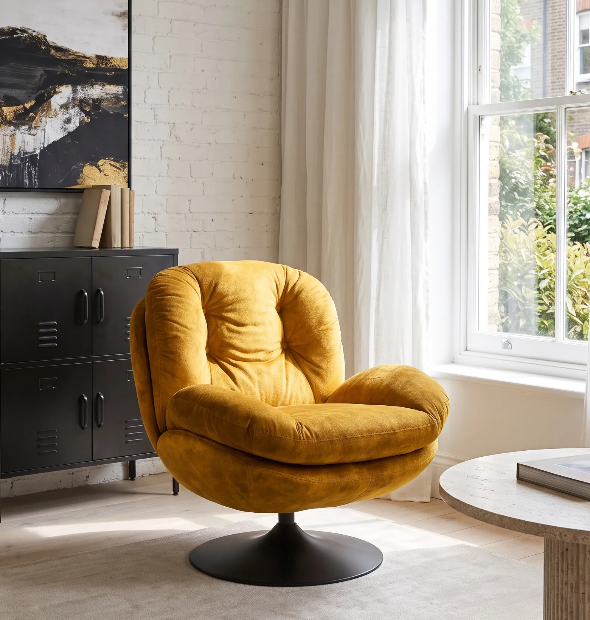
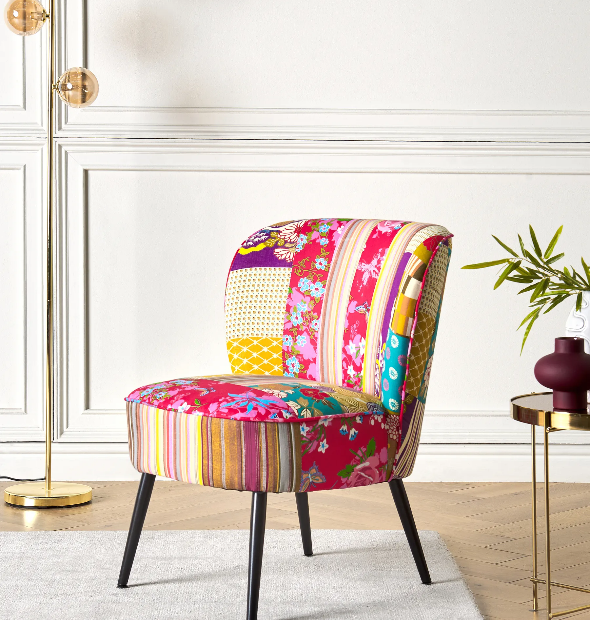
An armchair works best when it relates to the room around it, rather than standing apart from it. A few consistent choices make that connection without a full redecoration.
- Echo the sofa's shade, leg finish, or curve for a matching look, or choose a deliberate contrast, such as a curved chair beside a straight-lined sofa
- Repeat the chair's fabric or colour in a cushion, throw, or rug elsewhere in the room, so the two don't look disconnected
- Mix materials rather than matching them exactly, such as a rattan chair beside a fabric sofa, for a less uniform look
- Place a lamp and a small side table beside a chair used mainly for reading, or angle it towards other seating if it is there for conversation
- In a small room, keep the chair lighter in appearance, with visible legs and a lower back, so it doesn't dominate the space

Shop the armchairs now
What to check before you buy
Run through these checks against the product page and your own room before placing an order.
- Overall width, depth, and height against your floor space and nearby windowsills, radiators, or cupboards, with extra depth for any recliner, swivel, or rocking mechanism
- Wall clearance behind the chair if it reclines, taken from the manufacturer's specification rather than estimated
- Seat depth against the height of the main user, so the knees clear the front edge comfortably
- The listed material and finish, fabric, eco-leather, velvet, bouclé, or rattan, since each needs different care and suits a different household
- Frame material, since a hardwood or plywood frame generally outlasts a softwood one
- Doorway, hallway, and staircase width along the delivery route, especially for a large wing or recliner chair
- Whether the cover is removable and machine-washable, and whether you can order a fabric swatch or test-sit the model before committing to a higher-value chair
Frequently asked questions
Which armchairs are the most comfortable?
There is no single most comfortable style, since it depends on how you sit and what you use the chair for. A deep-seated recliner or wingback suits long, relaxed sitting, while a firmer seat with supportive armrests suits shorter, upright use such as mealtimes or quick breaks. Within any style, the right seat depth for your height and a high-resilience foam cushion make the biggest difference.
Does an armchair need a matching footstool?
No. A footstool is optional and mainly adds a place to rest your feet or legs; many armchairs, including most recliners, already bring the footrest built into the mechanism. If you do buy one separately, look at options with a storage compartment under the lid, which adds practical use beyond resting your feet.
Will a large armchair fit through a standard doorway or up a staircase?
Most armchairs pass through a doorway on their side or at an angle, but a wide wing chair or a recliner with a fixed frame can still get stuck on a tight staircase turn. Measure the narrowest point of your access route, including door frames and landing turns, before ordering a large piece.
Can an armchair be reupholstered later?
A chair with a solid hardwood or plywood frame and traditional construction can usually be reupholstered, which extends its life well beyond the original fabric. A chair built on a lightweight frame with fabric glued or stapled directly to foam is harder and more costly to recover.
Is a swivel base worth choosing?
A swivel base is worth it in a room where the chair needs to face more than one direction, such as towards a television and a window. It adds little practical benefit in a fixed reading corner, where a static base is simpler and usually more stable.
Do I need to protect the floor under an armchair?
Hard floors benefit from felt or rubber pads under the legs, since a loaded chair can scratch wood or tile over time, especially if it gets moved often. On carpet this matters less, though heavy legs can still leave lasting indentations.