Free Delivery & Return
 365-Day Returns
 10 Million Happy Customers
 500,000 Products in Stock

Bouclé vs Chenille: Which Upholstery Fabric Is Better?
Reviewed by the Beliani Content Team · Updated November 2026
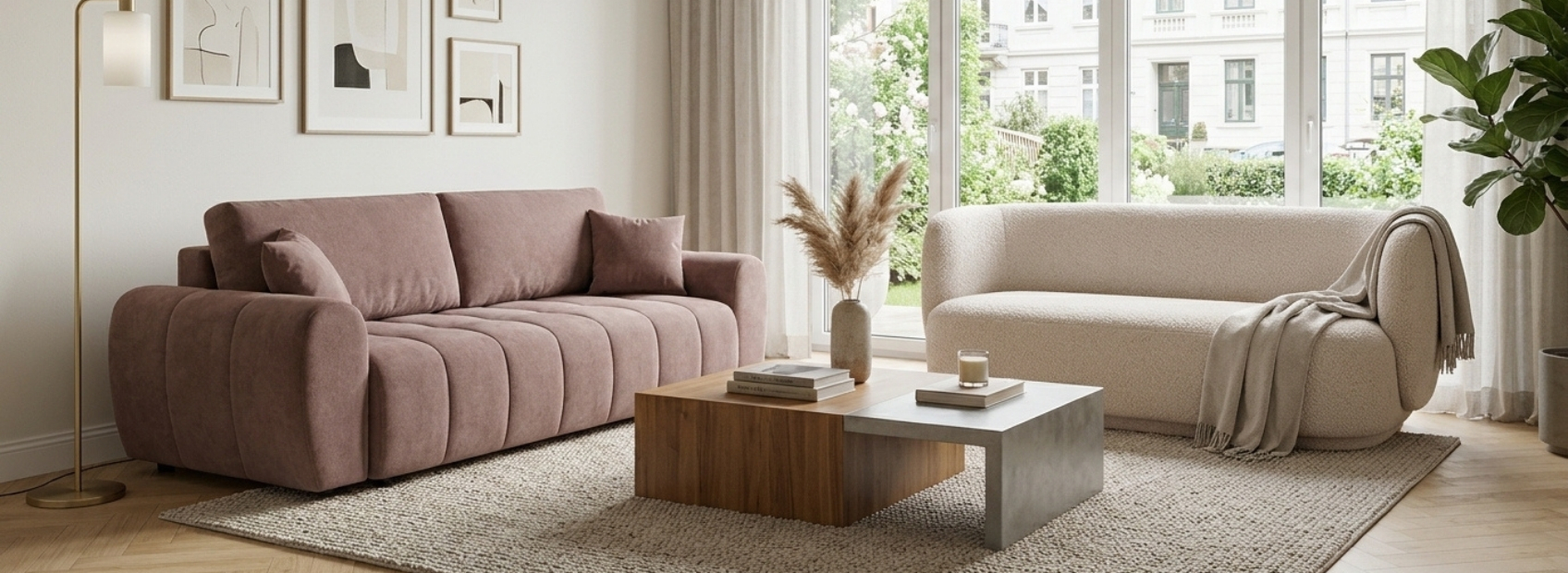
Bouclé and chenille keep turning up on the same shortlist, since both are soft, textured fabrics that look right at home in a warm, muted colour scheme. From across the room they could pass for twins, but give them a few weeks of daily life, from a cat’s claws to a spilled drink, and they behave very differently. This guide profiles each fabric on its own first, then compares them side by side so the differences are easy to spot even without touching either one.
In short
Bouclé or chenille: which is better for everyday use?
Chenille is generally the easier everyday fabric: its flat, velvety pile resists snagging, copes well with light wear and is simple to spot-clean, so it’s a safer bet for busy households with children or pets. Bouclé has a looped, nubby surface that gives furniture a structured, design-led look, but those loops can catch claws, buttons and zips, so it suits calmer, lower-traffic rooms better. Neither fabric wins every time. It depends on whether the piece will lead a quiet life or host a toddler, a dog and a Friday takeaway.
What tips the balance:
- How much daily wear the piece will take, and whether pets or young children are in the home
- Whether you prefer a soft, flowing drape or a structured, textured surface
- How much time you want to spend on spot-cleaning and lint removal
What is bouclé fabric and how does it perform?
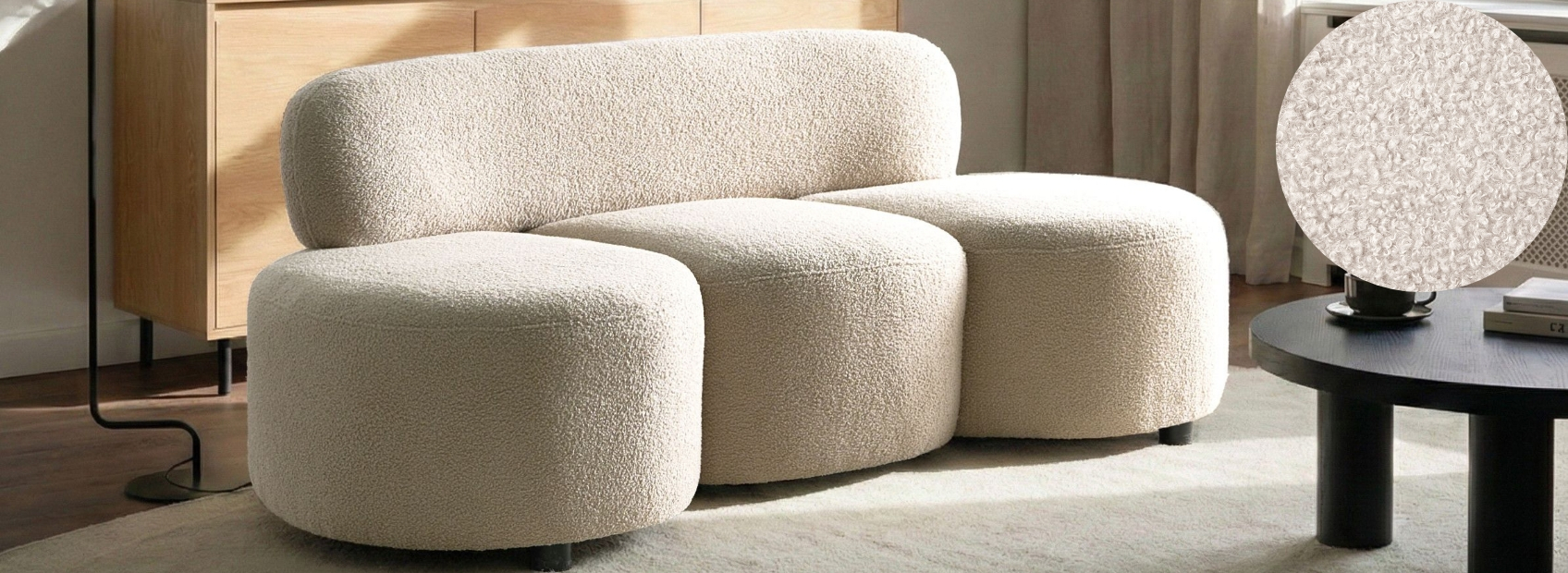
What is bouclé made of?
Bouclé takes its name from the French word for “curled” or “buckled”. It’s woven or knitted from a looped yarn, which leaves small raised loops across the face of the fabric instead of a flat surface. Upholstery-grade bouclé is traditionally wool or a wool blend, though fully synthetic versions in acrylic or polyester are common too, usually for better durability and easier cleaning. The loops give bouclé its structured, nubby appearance and its strong link with mid-century and Scandinavian-style furniture.
Shop now: bouclé fabric
How bouclé copes with daily life?
The raised loops are also bouclé’s main weak point. Pet claws, buttons, zips and jewellery can catch on them, pulling a loop out of shape or snagging the yarn. The looped surface also traps crumbs and dust more readily than a flat weave, which makes it fiddlier to spot-clean. Friction from regular sitting can cause bouclé to pill over time, particularly on pure wool versions. Wool-synthetic blends and fully synthetic bouclés generally resist pilling better, so it’s worth checking the fibre content if the piece will see heavy daily use.
Best rooms and furniture for bouclé
Bouclé is most at home on pieces that are seen more than they’re used hard: an accent armchair, a headboard, or a sofa in a living room that mainly hosts guests. It works well in a lower-traffic room with no pets or young children, and it’s a natural fit for a mid-century or Scandinavian-inspired scheme.
What is chenille fabric and how does it perform?
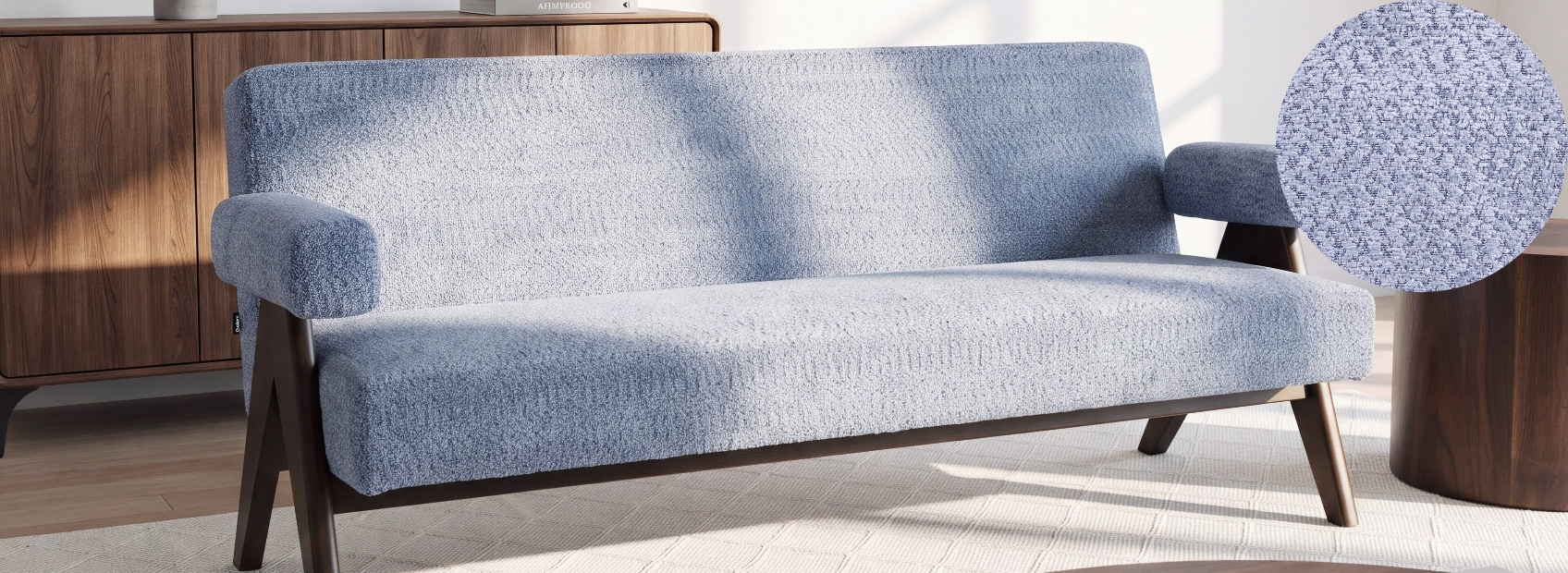
What is chenille made of?
Chenille is named after the French word for “caterpillar”, which is a fair description of the fuzzy, fringed yarn it’s woven from. Short fibres are twisted tightly around a core yarn, then woven into fabric, producing a soft, velvety pile that catches the light differently depending on which way it’s brushed, much like velvet. Upholstery chenille is commonly cotton, polyester, acrylic, rayon, or a blend of these.
How chenille copes with daily life?
Chenille’s flat, dense pile has nothing for claws, buttons or a zip to catch on, so it glides rather than snags. Crumbs and dust sit on the smoother surface instead of settling into loops, which makes it easier to vacuum and spot-clean. The main wear point is the pile itself: it can flatten in heavily used spots over time, and this is more visible on darker colours than on lighter ones.
Best rooms and furniture for chenille
Chenille earns its keep on the pieces that take the most daily contact, such as a family sofa, a sofa bed, or dining chairs in a household that eats at the table every day. Dining chairs in particular benefit from chenille’s easier spot-cleaning, since food and drink spills are far more likely there than in a formal sitting room.
How should you clean bouclé and chenille?
Both fabrics usually carry a cleaning code on the manufacturer’s label:
- W means a water-based cleaner is safe to use
- S means only a solvent-based cleaner should be used, best left to a professional
- WS means either type of cleaner can be used
- X means vacuum only, with no liquid cleaner of any kind
Beyond the code, vacuum both fabrics regularly with an upholstery attachment, so dust and pet hair don’t settle into the surface. Blot spills straight away rather than rubbing. Rubbing feels productive, but it only pushes the liquid deeper into bouclé’s loops or chenille’s pile.
Read more: furniture care guide
See how each fabric handles daily life
Who lives with a sofa usually matters more than how it looks. Cats and toddlers are ruthless fabric testers, so choose a test below to see how each fabric copes, shown in cross-section.
Choose a test to see how each fabric copes with everyday life, shown in cross-section.
Bouclé
Claw test
Snags
Loops can snag on pet claws, buttons, zips, and jewellery.
Crumb test
Traps crumbs
Loops trap crumbs and dust, so it is fiddlier to spot-clean.
Daily sitting test
Can pill
Friction can make bouclé pill, particularly on pure wool versions. Wool-synthetic blends and fully synthetic bouclés generally resist pilling better.
Chenille
Claw test
Glides over
A flat pile with no loops means there is nothing for claws, buttons or a zip to catch on.
Crumb test
Easier to clean
Crumbs sit on the smoother surface, so it is easier to vacuum and spot-clean.
Daily sitting test
Pile can flatten
The pile can flatten in heavily used spots, which is more visible on darker colours.
Simplified illustration of how bouclé and chenille fabric behave.
Bouclé vs chenille at a glance
| Aspect | Bouclé | Chenille |
|---|---|---|
| Surface texture | Looped, nubby, slightly firmer to the touch | Soft, velvety pile |
| Appearance | Textured surface with visible loops and "cloud effect" | Smooth, flowing drape that shifts shade as the pile catches the light |
| Comfort | Cosy and tactile, a little rougher against bare skin | Soft and plush against the skin, marginally warmer to sit on |
| Everyday wear | Loops can snag on pet claws, buttons, zips, and jewellery | Pile can flatten in heavily used spots, more visible on darker colours |
| Cleaning | Loops trap crumbs and dust, fiddlier to spot-clean | Smoother surface is easier to vacuum and spot-clean |
| Styling | Design-led, closely linked to mid-century and Scandinavian looks | Soft and relaxed, suits traditional and transitional rooms |
| Best for | Lower-traffic rooms, statement chairs, homes without pets | Family rooms, everyday sofas, homes with children or pets |
The weave matters as much as the fabric name
Two sofas can both say “chenille” on the label and age very differently. A tightly woven, densely looped bouclé will usually outlast a loosely knitted one, and the same goes for chenille: a dense, closely packed pile resists flattening far better than a thin one. When comparing two products in the same fabric family, tighter construction is a more reliable sign of durability than the name on the label.
Which fabric should you choose?
Match the fabric to how the room is used, not just the look you prefer.
Bouclé
Go for bouclé if...
- You want a structured, sculptural texture rather than a flat surface
- The piece sits in a lower-traffic room, such as a formal living room or a reading corner
- No pets or young children regularly use the room, so no claws and no sticky fingers
- You’re decorating in a mid-century or Scandinavian-inspired style
Chenille
Go for chenille if...
- You need an easy-care fabric for a family sofa, sofa bed or everyday dining chairs
- Pets or young children use the room regularly
- You prefer a soft, flowing drape over a textured, looped surface
- A quick spot-clean matters more to you than a structured look
Shop now: fabric sofas and fabric armchairs
Before you buy: what to check
Run through this list before you commit to either fabric.
- Who will use the piece daily: pets, young children, or mostly adults and occasional guests
- How much natural light and daily traffic the room gets
- The cleaning code on the label (W, S, WS or X) and whether that suits how you’ll realistically clean it
- The fibre content, especially for bouclé: a wool-synthetic blend or fully synthetic weave resists pilling better than pure wool
- How tight the weave or pile is: a denser construction outlasts a loose one in either fabric
- The colour depth if the piece will see heavy use: flattening and wear show up more on darker chenille
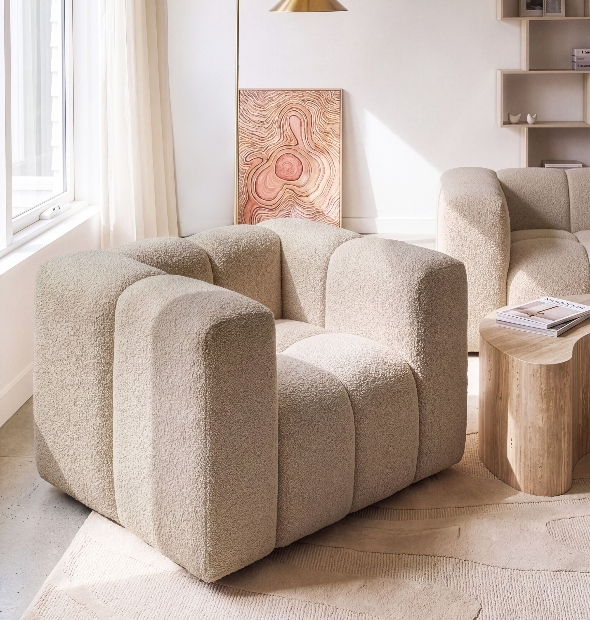
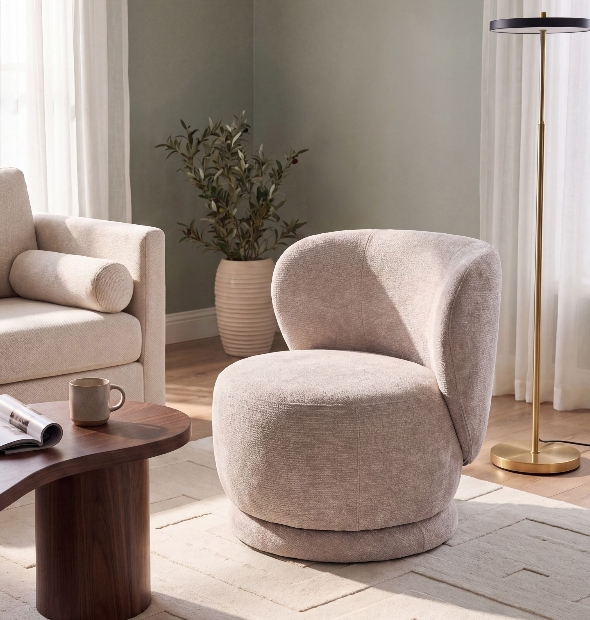
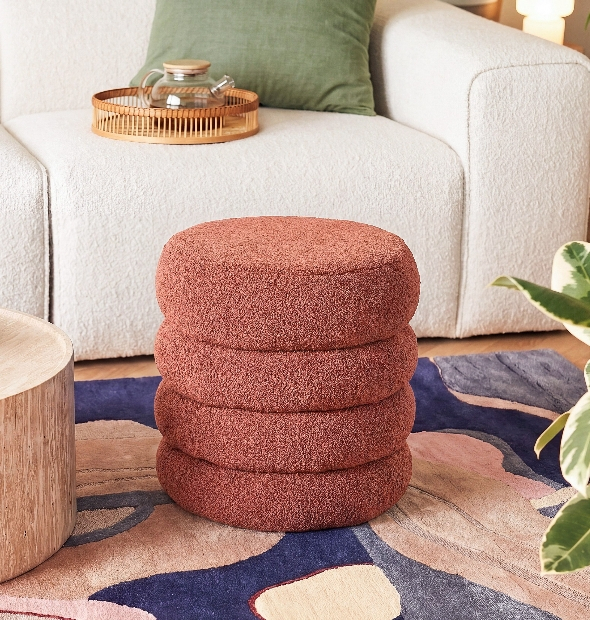
Shop now: products in the pictures
Frequently asked questions
Does bouclé fabric pill over time?
Yes, bouclé can pill, particularly on pure wool versions that see a lot of friction. Wool-synthetic blends and fully synthetic bouclés generally resist pilling better, so check the fibre content if you expect heavy daily use.
Can you mix bouclé and chenille in the same room or sofa?
Yes, the two textures work well together as long as they share a colour palette. A chenille sofa with a pair of bouclé accent chairs is a common combination, since the contrast in surface texture adds depth rather than clashing.
Which fabric holds its colour better in direct sunlight?
This depends more on the dye and fibre type than on whether the fabric is bouclé or chenille. Synthetic fibres such as polyester and acrylic generally resist fading better than natural fibres like wool or cotton, so a piece in direct sun is safer in a synthetic or blended version of either fabric.
Do I need professional cleaning for a fabric marked with an S or WS code?
An S code means the fabric should only be cleaned with a solvent-based cleaner, which is usually safest left to a professional upholstery cleaner. A WS code allows a water-based cleaner too, which makes careful spot-cleaning at home more realistic for light marks.
Is one fabric warmer to sit on than the other?
Both feel warmer to the touch than a smooth weave or leather, since the loops or pile trap a thin layer of air against the surface. Chenille’s denser pile tends to feel marginally warmer and softer than bouclé’s more open, looped structure.