Free Delivery & Return
 365-Day Returns
 10 Million Happy Customers
 500,000 Products in Stock

How to Choose the Right Bathroom Tap
Reviewed by the Beliani Content Team · Updated October 2026
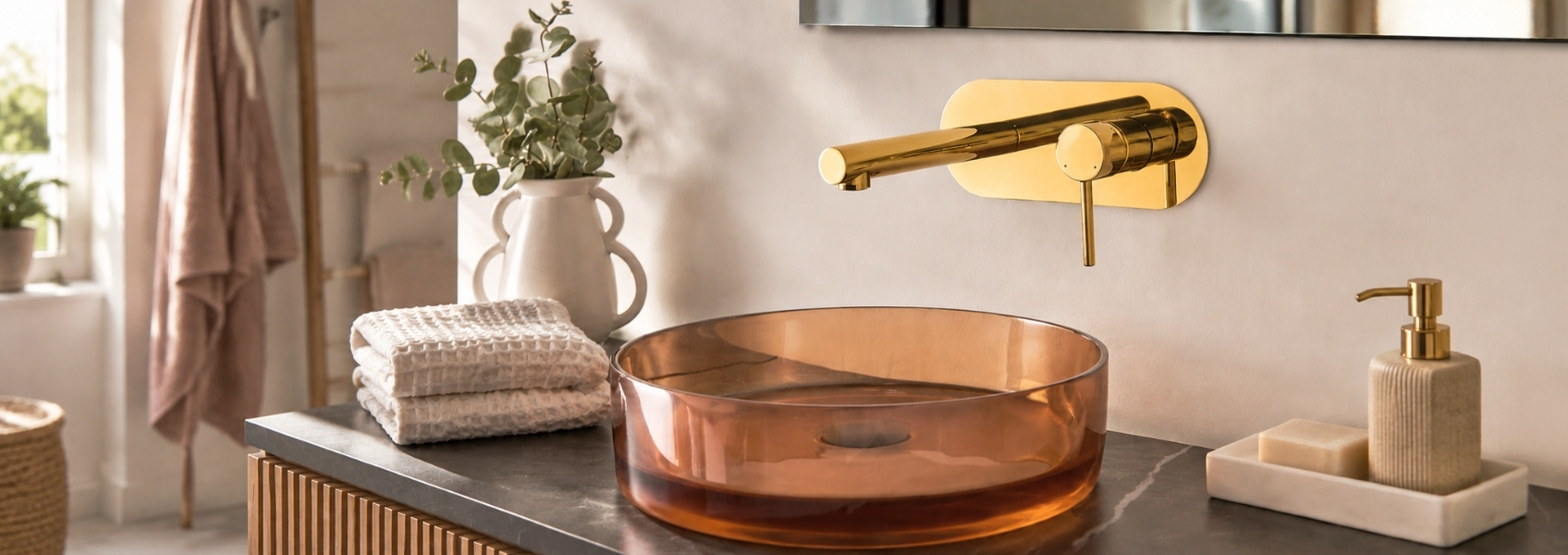
Every fixture in a bathroom - the basin, the bath and the shower - needs its own matching tap, since each has different flow and connection requirements; one tap cannot serve two different fixtures. Getting the wrong one can mean a tap that doesn't fit the holes you have, or doesn't deliver the flow or temperature control that fixture needs. This guide walks through mounting, fixture type, hole count and finish before you buy.
In short
How do you choose the right tap for your basin, bath or shower?
Start from the fixture, not the finish: a basin tap, a bath filler and a shower mixer each need a different flow rate and connection, so they aren't interchangeable. Match the tap to your existing mounting type and hole count first, then choose a finish based on how much cleaning you're willing to give it.
- Which fixture the tap is actually for: basin, bath or shower
- Whether you're keeping the same mounting type
- How many holes your basin or bath surround already has
- How much upkeep you want from the finish
Deck-mounted or wall-mounted: how do you decide?
Most basin and bath taps are deck-mounted, sitting on the basin or the bath surround, because that's where the supply pipes already run in most bathrooms. A wall-mounted tap needs the hot and cold pipes rerouted behind the tiles or plaster, to the tap's mounting height. Changing the mounting type in either direction usually means redoing the water installation and opening the wall, so it's realistic during a full bathroom renovation but rarely worth it for a simple tap swap.
- Going from wall-mounted to deck-mounted also needs plumbing work, since the pipes have to be brought down to below the basin or bath surround rather than into the wall at tap height
- Going from deck-mounted to wall-mounted means opening the wall before tiling, so it's best planned alongside a full bathroom refit
- Wall-mounted bath fillers free up the rim of the bath, which matters for a freestanding tub with no surround to mount a tap on
- Deck-mounted taps are easier to check and reseal, since the connections stay accessible under the basin or behind the bath panel
Does your basin have the right tap holes?
Before choosing a basin tap, check how many holes the basin already has, since a mismatch is the most common fitting problem. A single mixer needs one hole, two separate taps/a separate tap and spout need two, and a widespread three-piece set needs three spaced holes.
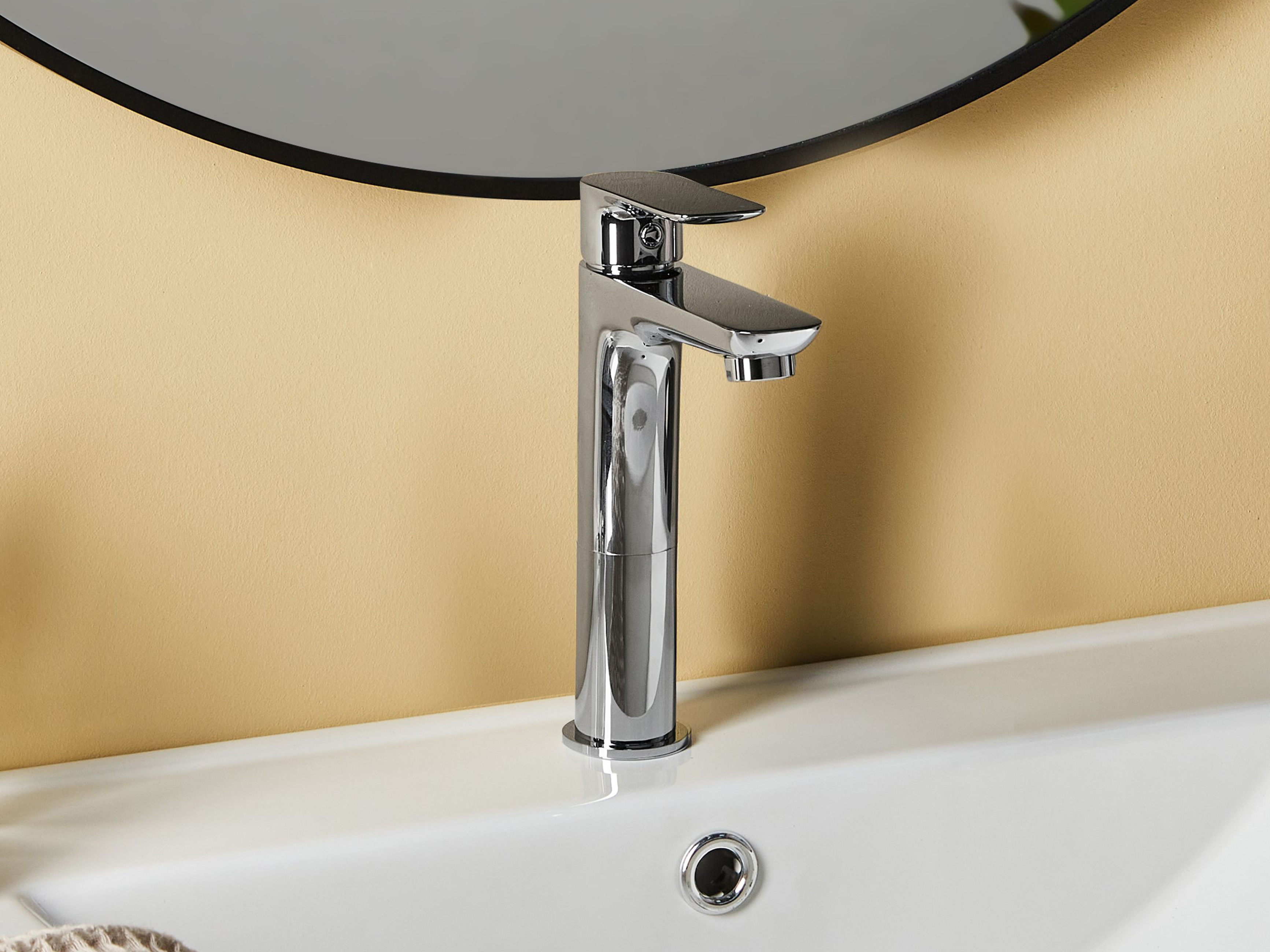
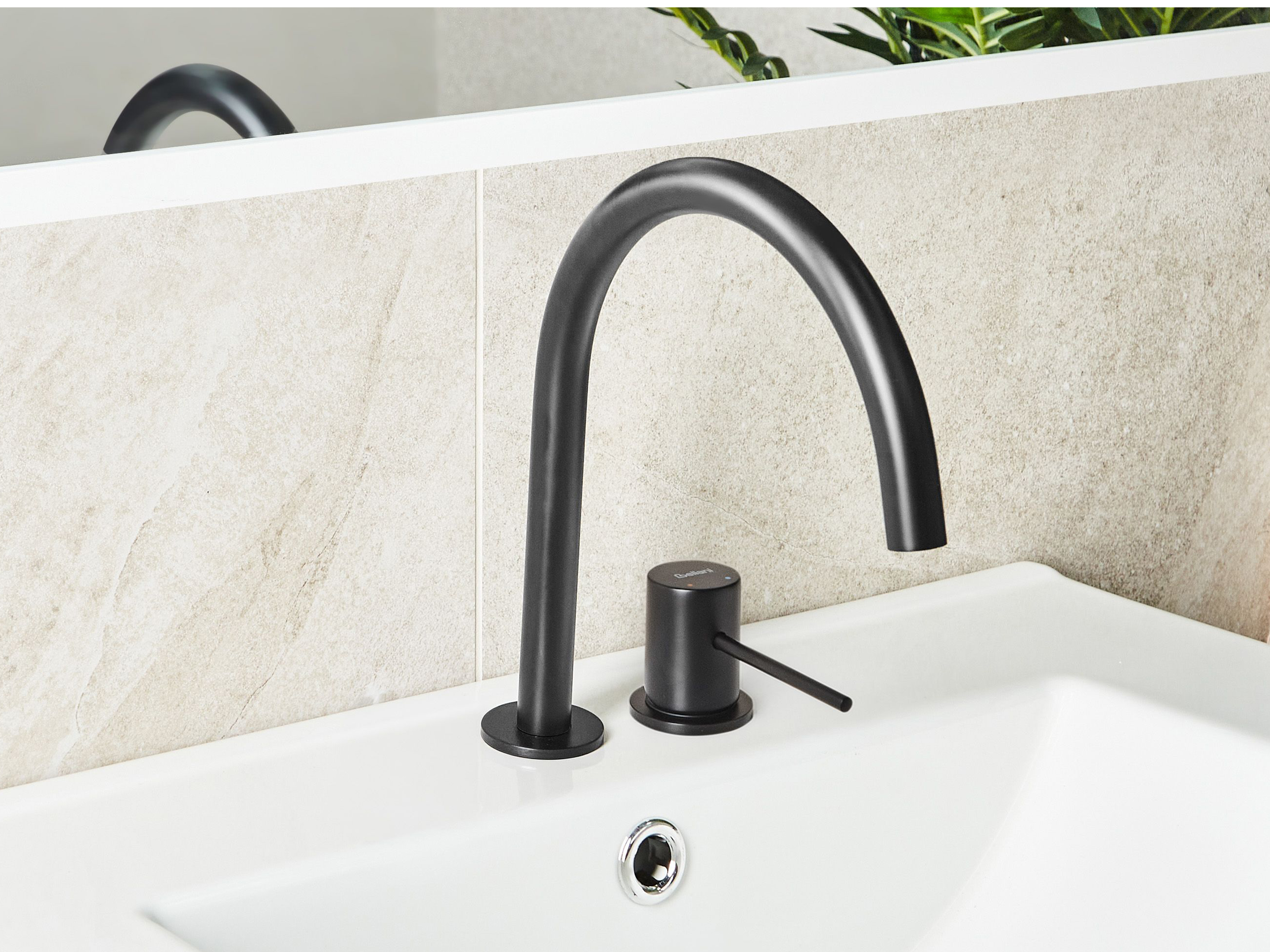
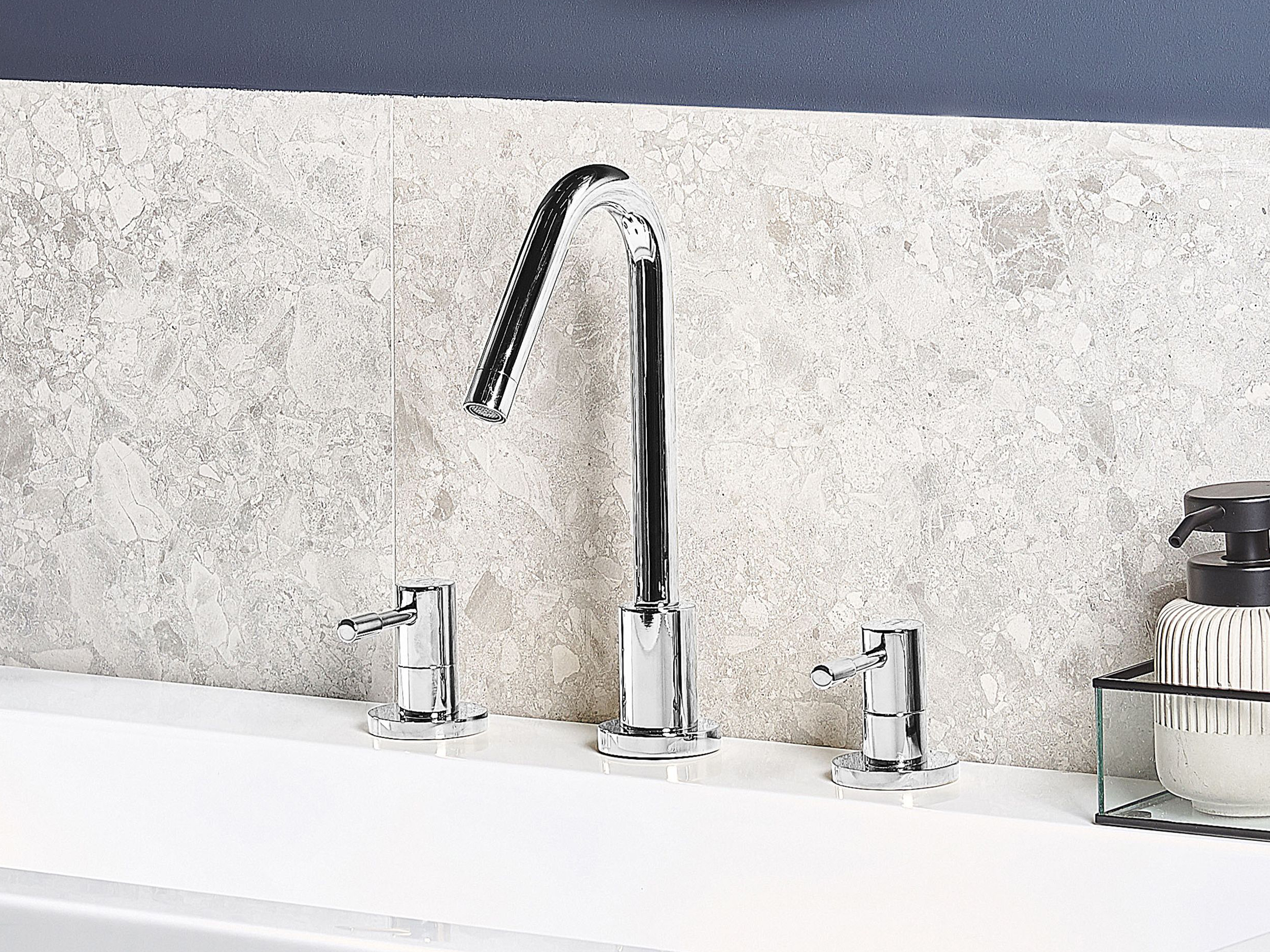
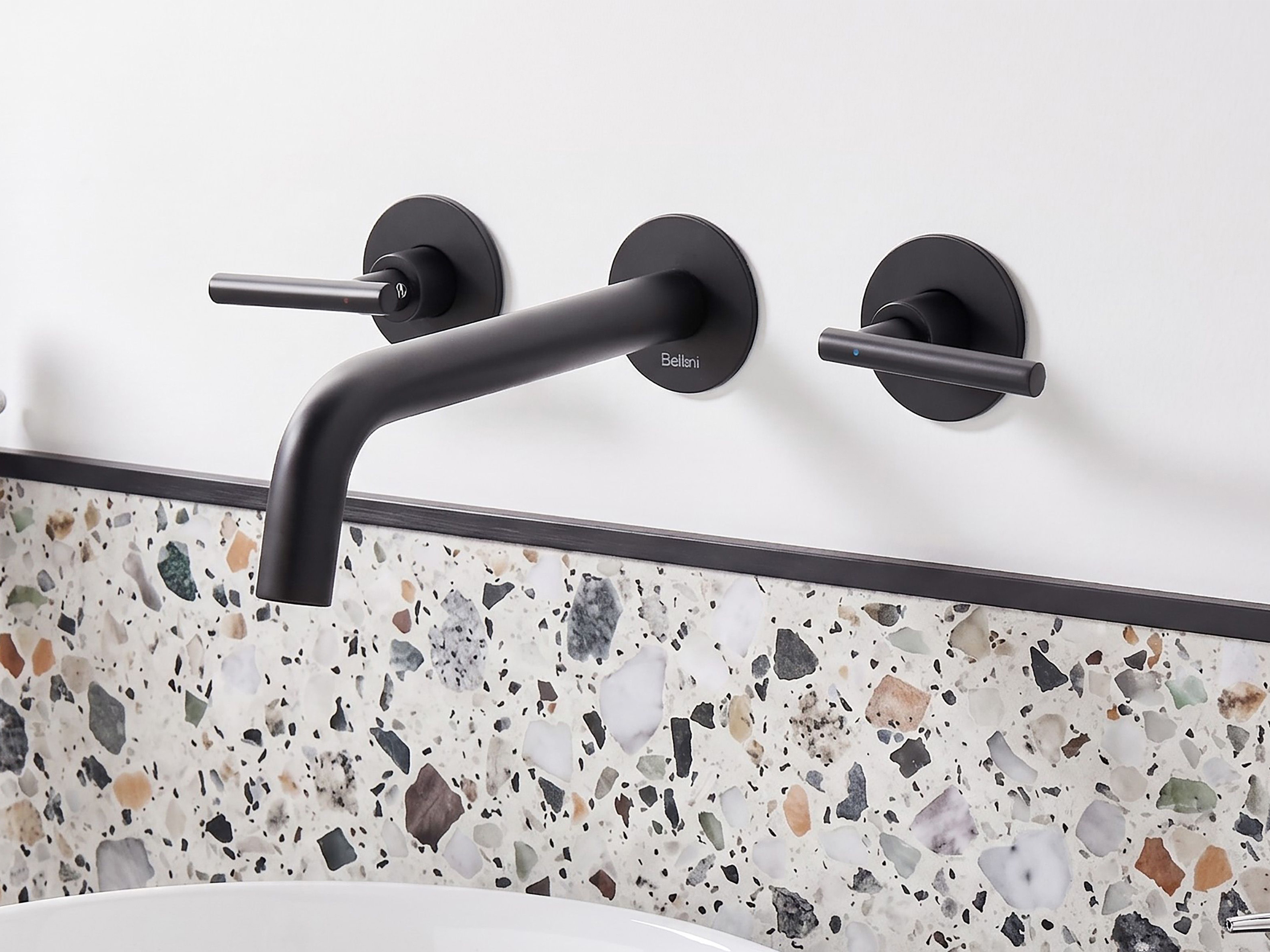
- If your basin has no tap hole at all, a tap can't be fitted to the ceramic; choose a wall-mounted tap, a deck-mounted tap fitted through the countertop beside the basin, or a basin that already has one
- If your basin has a marked knockout point but no open hole, opening it is usually straightforward for a fitter to do
- If your basin has no marking for the hole you need, drilling fresh ceramic is risky and can crack the basin; this is a job for a professional at best, and often not worth attempting
- If it's not worth drilling, it's usually more reliable to choose a tap that matches the holes you already have, or to replace the basin with one drilled for the tap you want
- Extra unused holes can be covered with a matching deck plate rather than left open
Which tap dimensions should you compare?
Use the product's technical drawing rather than assuming all bathroom taps have the same dimensions. Three measurements decide whether a tap will fit: mounting-hole spacing, outlet height and spout projection. These vary by model, so always compare them with your basin's dimensions before buying.
- Mounting-hole spacing: the distance between the tap's fixing points, which needs to match the holes in your basin or bath surround
- Outlet height: the vertical distance to the water outlet, useful when checking clearance above the basin
- Spout projection: the horizontal reach of the spout, which determines how far the water extends into the basin
Which tap or fixture suits your basin, bath or shower?
Each bathroom fixture is built around a different flow rate and function, so the tap needs to match the job.
Basin
Basin taps and mixers
Sized for hand washing rather than fast filling, with a lower flow rate. Available as a single mixer, two separate hot and cold taps, or a wall-mounted spout for basins with no surround.
Bath
Bath taps and fillers
A higher flow rate fills the tub in reasonable time. Deck-mounted on the bath surround for a standard tub, or floor-standing and wall-mounted for a freestanding bath with no surround.
Shower
Shower mixers and valves
Controls temperature and, on some models, a diverter between a fixed head and a handset. Best chosen as thermostatic, covered below, since temperature control matters more here than on a basin or bath.
Do you need a thermostatic mixer?
A thermostatic mixer blends hot and cold water using an element that reacts to temperature rather than just to the handle position, so it holds the chosen temperature even if someone else in the home draws water elsewhere at the same time. A standard mixer only responds to the change in pressure, so a sudden drop in cold water can scald the person in the shower. It's worth choosing the thermostatic version for a shower, and for a bath used by children or older household members, even though it costs more than a standard mixer.
Shop now: basin taps and bath taps
Which tap finish should you choose?
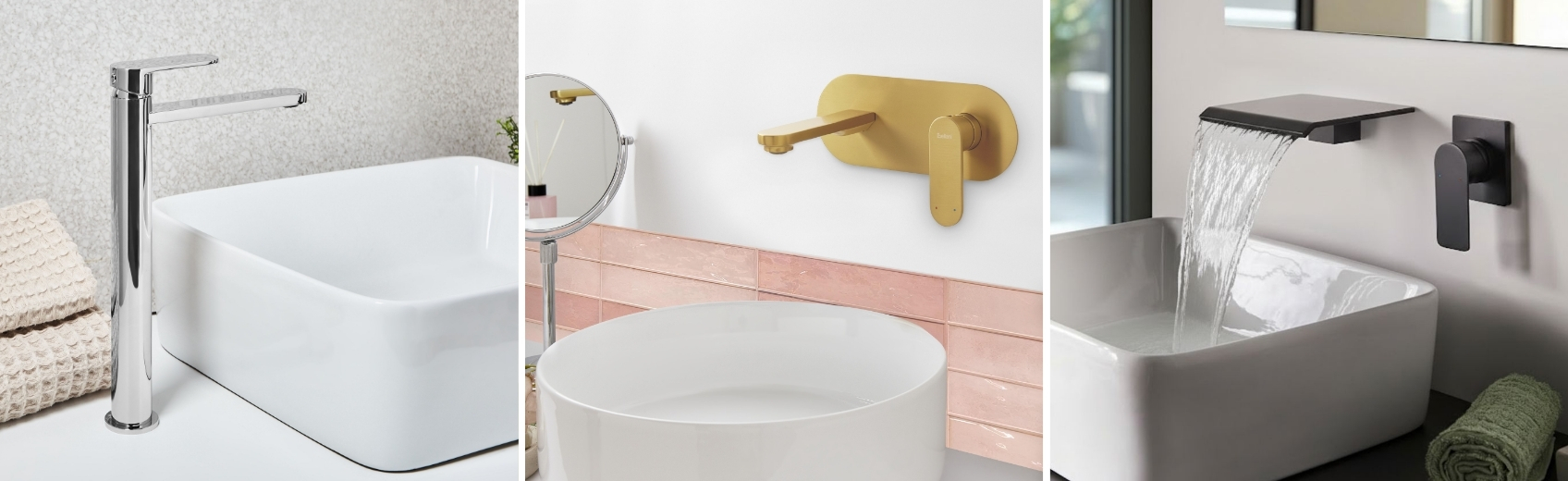
The finish affects daily upkeep as much as looks, and the three main options age quite differently, which matters most on a basin tap used several times a day.
| Finish | Cleaning and everyday care | How it ages and fits your style |
|---|---|---|
| Chrome | Wipes clean easily; a vinegar solution removes limescale and watermarks | Resists corrosion well and rarely goes out of style, though the shine needs regular polishing and shows marks sooner than a brushed finish |
| Brushed steel or nickel | Hides fingerprints and watermarks between cleans, so needs less frequent wiping | Ages evenly and keeps its satin look with only occasional care; currently popular and pairs well with stone, wood and softer palettes |
| Matt black | Needs wiping several times a week, since watermarks and limescale show clearly on the matt surface | The coating can chip or scuff with heavy daily use; a strongly on-trend look right now, worth weighing against how long you want it to last visually |
What is inside a mixer tap?
A mixer tap combines several parts that control flow, temperature and the water stream, whether it's fitted to a basin, a bath or a shower.
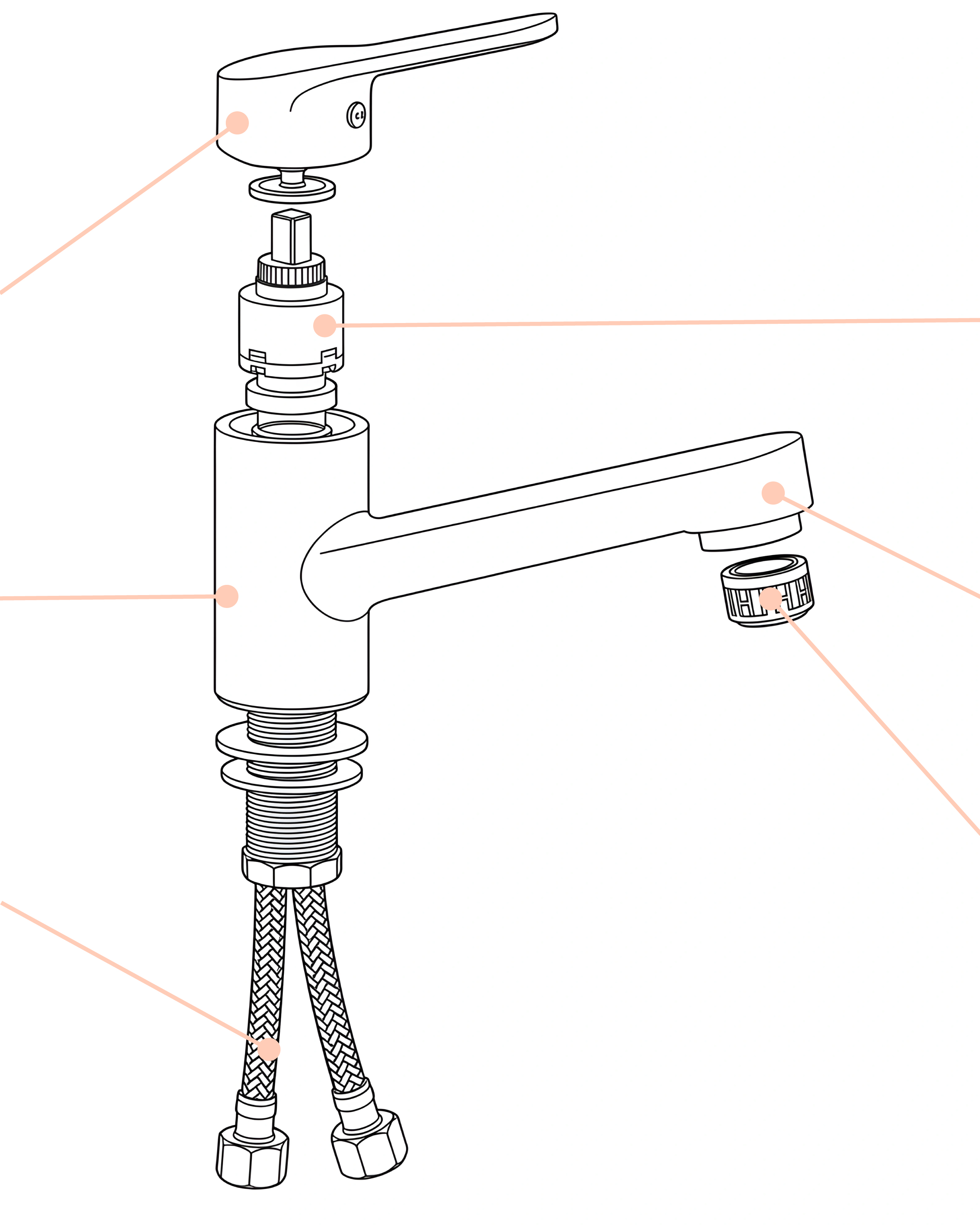
Typical mixer tap construction. Components and arrangement may vary by model.
Shop now: shower sets
What to check before buying
Before choosing a bathroom tap, run through the practical checks that decide whether it will actually fit and work well.
- Which fixture the tap is for, since a basin tap, bath filler and shower mixer aren't interchangeable
- Whether your current tap is deck-mounted or wall-mounted, and whether you're keeping that type
- The number of tap holes in your basin or bath surround, matched to the new tap's connections
- Whether the shower or bath mixer is thermostatic, especially with children or older users at home
- A finish chosen for how often you're willing to clean it, not appearance alone
- Whether spare parts like cartridges and aerators are available for the model
Read more: transforming your bathroom into a home spa
Frequently asked questions
What's the difference between a basin tap, a bath tap and a shower mixer?
A basin tap is sized for hand washing and a lower flow rate, a bath tap or filler has a higher flow rate to fill the tub in reasonable time, and a shower mixer controls both temperature and, on some models, a diverter to a handset. Each is built for its own fixture and isn't usually interchangeable.
Can I have a wall-mounted tap if my basin currently has a deck-mounted one?
Only if the supply pipes can be rerouted into the wall behind the basin or bath, which usually means opening up tiles or plaster. It's realistic during a renovation but rarely worth it as a standalone swap.
Can extra holes be drilled into my basin for a different tap?
Only if the basin has a marked or thinned knockout point for that hole; drilling fresh ceramic without one is risky and often cracks the basin. In that case, it's usually safer to choose a tap that matches the existing holes or replace the basin.
Which tap finish is easiest to maintain in a bathroom?
Brushed finishes hide fingerprints and watermarks better than polished chrome or matt black, which matters most around a basin used several times a day. Chrome is easy to wipe clean but shows marks sooner, while matt black needs the most frequent care.
What if my basin doesn't have enough tap holes for the tap I want?
Choose a tap that matches the holes you already have, since adding holes to a finished ceramic basin is only advisable where a knockout point exists. Otherwise, a new basin drilled for the tap you want is usually the more reliable option.