Free Delivery & Return
 365-Day Returns
 10 Million Happy Customers
 500,000 Products in Stock

How to Divide a Room Without Building Walls
Reviewed by the Beliani Content Team · Updated November 2026
Stopping a home desk from crowding the sleeping area doesn't require launching into The Sims build mode. Pairing open bookcases, soft fabrics, and ambient lamps establishes clear boundaries while keeping the overall space feeling open and airy. It all comes down to picking the right division method based on real storage and privacy needs.
In short
What is the easiest way to divide a room without building a wall?
Use a freestanding screen when you need privacy, open shelving when you also need storage, or furniture placement when you only want to mark separate functional areas. Curtains offer flexible separation, while rugs and lighting can define zones without adding a physical barrier. The best solution keeps normal walking routes and daylight open while giving each part of the room a clear purpose.
Which type of room divider works best?
Start by deciding whether you need actual privacy or simply want different parts of the room to feel separate. A physical divider is useful around sleeping, dressing or working areas, while furniture and textiles are often enough between living and dining zones.
| Divider | Best for | Privacy | What to consider |
|---|---|---|---|
| Folding screen | Bedroom, dressing area, home office | Medium to high | Easy to move and reposition, but solid designs can reduce light if placed directly in front of a window. |
| Open shelving | Living room, dining area, home office | Low to medium | Adds storage and allows some light through. Use only a unit that is stable and suitable for the intended placement. |
| Sofa or other furniture | Open-plan living and dining spaces | Low | Creates a boundary without making the room feel enclosed and works particularly well when the furniture is already needed. |
| Curtain or textile panel | Sleeping areas and temporary privacy | High when closed | Can disappear almost completely when open, although the curtain still needs a suitable track, pole or support system. |
| Rugs and lighting | Visual zoning in open-plan rooms | None | Keeps the whole space open while making separate functions easier to recognise. |
Open shelving
Creates two zones with useful storage while allowing some daylight through.
Sofa as a divider
Moves the sofa into the room to create a natural boundary without a screen.
Folding screen
Provides a movable visual barrier when extra separation is needed.
Curtain divider
Offers soft separation that can be opened when both zones are in use.
Illustrative layouts only. Furniture dimensions and placement are not to scale.
Shop now: room dividers
How do you divide an open-plan living and dining room?
The back of a sofa can create a natural boundary between the seating area and the rest of the room. Position the sofa so that it faces the main living-room focal point, then use the space behind it for the dining area, a console or open shelving.
Floor treatments can reinforce the layout without adding more furniture. Place the main seating group on one rug and leave the dining area visually separate, then give each zone its own lighting source. The room remains open, but its functions become much easier to read.
When the living room shares its space with a kitchen, a kitchen island or breakfast bar can provide another natural boundary. It marks the transition between cooking and relaxing while offering extra worktop or dining space. In smaller rooms, a freestanding dining table can create a similar division without requiring a permanent installation.
Shop now: bookcases and shelving units
How can shelving divide a room without blocking the light?
An open shelving unit creates a more substantial boundary than a sofa while still allowing sightlines and daylight to continue through the room. It works well between a living area and dining space, or between a desk and the rest of a multipurpose room.
A double-sided shelving unit is particularly useful because both zones can access the storage and see a finished furniture surface. Choose a design without an enclosed back, or one with open compartments on both sides. Avoid filling every shelf with solid storage boxes or large objects. Leaving some sections open makes the divider visually lighter and prevents the unit from behaving like a solid wall.
Check whether the shelving unit is suitable for freestanding use
Not every bookcase is designed to stand safely in the middle of a room. Check the product's installation and stability requirements before using shelving as a divider, especially with tall or narrow units.
How do you create a home office inside another room?
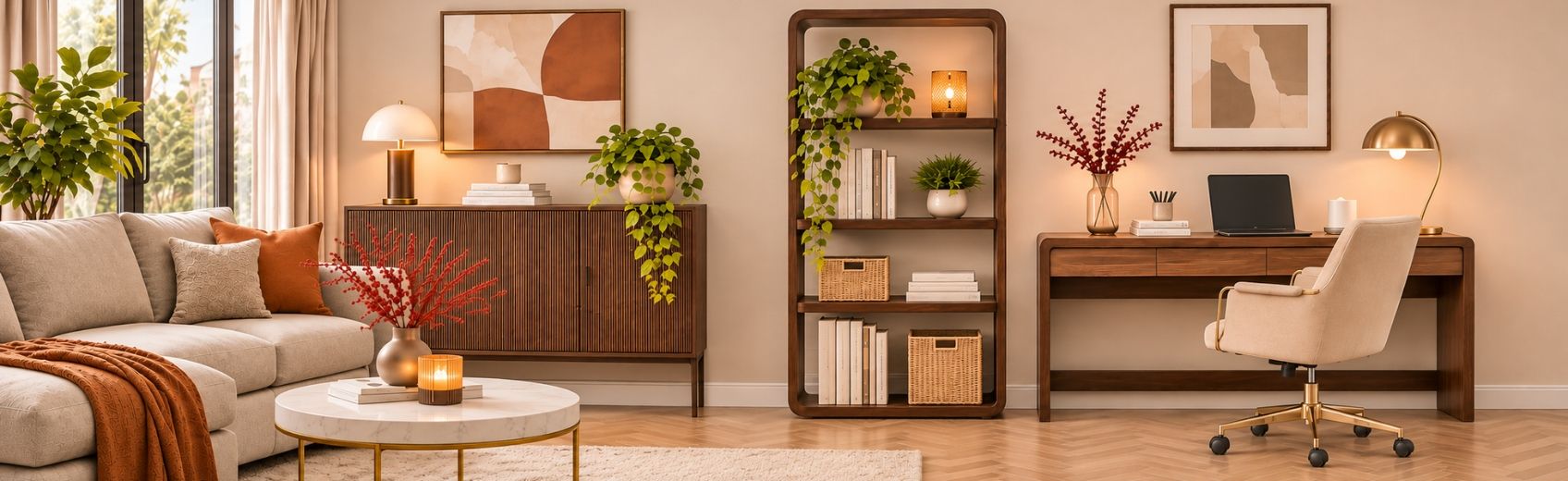
A workspace usually needs visual separation more than complete enclosure. Place a desk so that you are not facing the main activity area of the room, then use a folding screen or open shelving beside or behind the workstation to create a clearer boundary.
Keep access to daylight, sockets and normal walking routes when positioning the divider. A screen that hides the desk from the main living area can also make it easier for the room to return to its non-working function at the end of the day.
How do you create privacy in a bedroom or studio?
A folding screen is useful around a bed, dressing area or temporary guest space because it creates an immediate visual barrier and can be moved when no longer needed. A curtain gives stronger temporary coverage while taking up very little floor space when open.
For a small studio, avoid surrounding the sleeping area with several tall solid pieces. One divider positioned where privacy is actually needed usually creates a clearer layout without making the entire room feel enclosed.
How can colours and plants help divide a room visually?
Different wall colours can define functional areas without installing a physical partition. For example, a contrasting colour behind a desk can distinguish the workspace from the living area. Keep some colours or materials consistent across the room so the zones still feel connected.
Plants offer another way to create a natural boundary. A row of tall indoor plants or planters can partially screen a reading corner or dining area while keeping the space open. Check their light needs and keep planters off busy walkways.
What mistakes make a divided room feel smaller?
- Placing a tall solid divider directly in front of the main source of natural light.
- Creating a new zone without leaving a clear route through the room.
- Using several different dividing methods at once until the space feels fragmented.
- Choosing storage furniture that looks finished only from the front when both sides will remain visible.
- Using a large divider where a sofa, rug or change of lighting would provide enough separation.
- Blocking radiators, heaters or ventilation openings with screens or furniture.
Keep natural light flowing
Keep tall dividers away from the main window wherever possible.
Leave a clear walking route
Position furniture so people can move comfortably between zones.
Avoid too many dividers
Choose one main dividing method to keep the room visually connected.
What to check before choosing a room divider
Decide what the divider needs to achieve before choosing its size, material or position.
- Decide whether you need privacy, storage or only visual separation.
- Check where daylight enters the room and avoid unnecessarily blocking it.
- Keep the normal walking route between doors, seating and other frequently used areas clear.
- Check that freestanding furniture is stable and suitable for its intended position.
- Consider what both sides of the divider will look like from their respective zones.
- Make sure heating and ventilation points remain unobstructed.
Frequently asked questions
Does a room divider need to reach the ceiling?
No. A partial-height divider can be enough to mark separate zones while keeping the room visually connected and allowing light to travel through the space. Full-height separation is mainly useful when stronger privacy is the priority.
Can a room divider reduce noise?
Soft or upholstered dividers can absorb some reflected sound and reduce echo, but they will not soundproof a room. If noise control matters, combine the divider with rugs, curtains and other soft furnishings that absorb sound.
What is the best room divider for a rented home?
A freestanding folding screen is one of the simplest choices because it can be positioned without permanent alterations and moved when required. Suitable freestanding furniture can also work, provided it is stable and safe to use away from a wall.
Can plants be used as a room divider?
Yes. A row or cluster of taller plants can create a softer visual boundary while keeping the room open, although it will provide little privacy or sound separation. Choose plants according to the available daylight and the amount of maintenance you can provide.
Can you place a room divider near a radiator or air vent?
Avoid positioning a solid divider directly in front of a radiator, heater or ventilation opening. Keeping these areas unobstructed allows heat and air to circulate through the room as intended.