Free Delivery & Return
 365-Day Returns
 10 Million Happy Customers
 500,000 Products in Stock

Kitchen Organisation Guide: Storage, Shelves and Space Tips
Reviewed by the Beliani Content Team · Updated November 2026
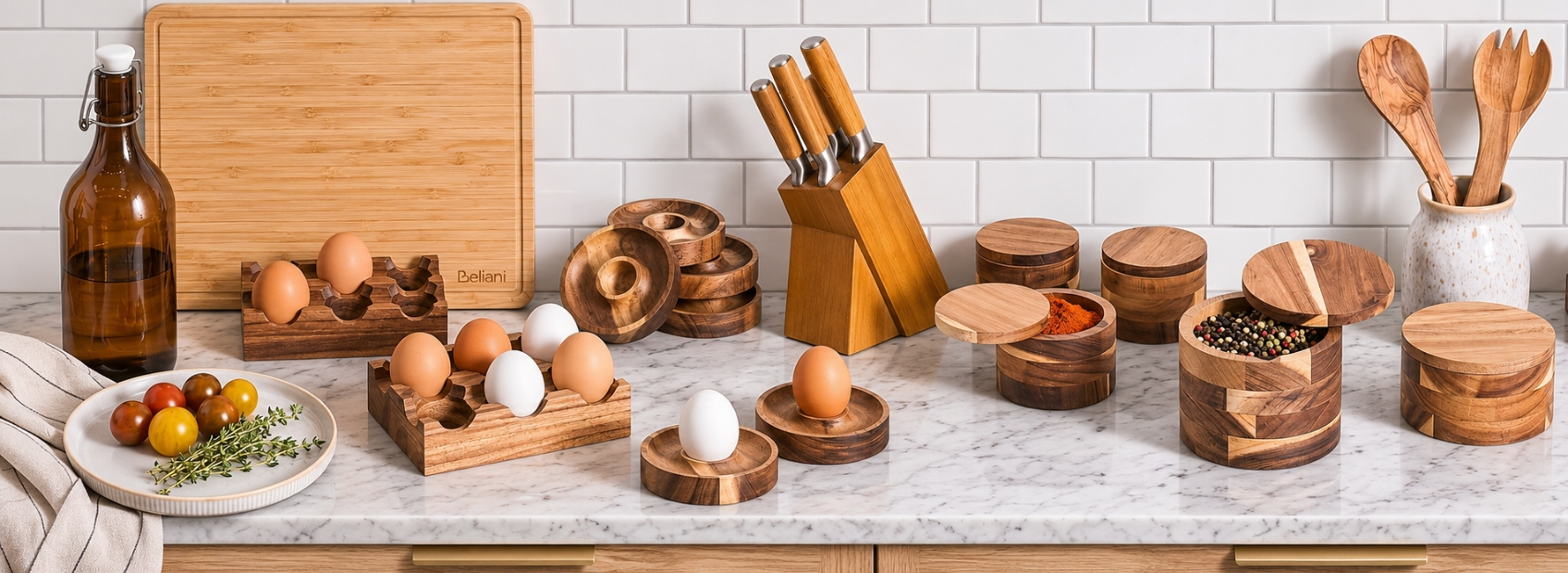
Even Gordon Ramsay would struggle to plate anything decent if his knives were buried under a heap of bags for life. Kitchens fill up fast: pans migrate to the back of a cupboard, stray gadgets take over a drawer, and the one shelf within easy reach ends up holding everything you use daily, plus a fondue set you’ve used once. This guide helps you get your kitchen organisation right and work out when extra storage is actually worth adding.
In short
What's the best way to organise a kitchen?
Store items where you first use them, not wherever there’s a gap: pans near the hob, everyday plates near the table or the dishwasher you unload, the bin near your main prep area. Keep the prime zone, roughly between hip and eye height, for things you reach for daily, and push occasional-use items to the top of wall units or the back of low cabinets. Use the wall as much as the floor, since shelving and wall-mounted racks free up cabinet space without adding a single piece of floor-standing furniture.
What should you look out for?
- Kitchen size: a galley kitchen needs tighter zoning than an open-plan one
- Fitted versus freestanding storage: freestanding pieces such as trolleys can move as habits change
- Number of cooks: a shared kitchen often needs duplicate everyday zones
How should you arrange a kitchen layout?
Whatever shape your kitchen is, single-wall, L-shaped, U-shaped or galley, a good layout links the fridge, sink and hob and leaves you somewhere to chop in between. This is the kitchen work triangle: keeping these three points within a few steps of each other, so you're not crossing the room mid-recipe. Fitting a comfortable stretch of worktop either side of the hob and sink matters more than the exact room shape, so choose whichever layout suits your space and keep that triangle tight.
Store items where you actually use them
Plan storage around four points: where you prepare food, cook it, store it and clean up afterwards. Keep them close, with the sink, hob and fridge within a few steps of each other, and you’ll stop doing laps of the kitchen mid-recipe.
Pans, oils and chopping boards belong closest to the hob and prep surface, since they’re used at every meal. Crockery, cutlery and glasses live nearest to where you eat or load the dishwasher, so unloading takes one motion rather than a small tour of the room.
Select a numbered point to see what belongs in each zone.
Food storage
Keep everyday ingredients and food containers near the fridge or preparation area. Group similar supplies so you can see what is available before shopping.
Shop now: shelving units
Preparation
Place knives, chopping boards, mixing bowls and measuring tools beside the main worktop. This avoids searching through cupboards while preparing ingredients.
Shop now: kitchen knives and kitchen organisers
Cleaning
Keep washing-up accessories, waste bins and securely stored cleaning products near the sink. Position everyday crockery close to the dishwasher for easier unloading.
Shop now: waste bins
Cooking
Store pans, lids and cooking utensils near the hob. Keep oven gloves within reach but away from heat, and avoid exposing oils and seasonings to direct heat or steam.
Shop now: pots & pans
Simple illustration for guidance, not to scale.
The most common zoning mistake
Storing items wherever there's an empty cupboard, rather than where they're used, is the most common mistake. Everyday plates kept in the cupboard furthest from the table, or pans stored two steps from the hob, add up to dozens of extra movements a day and make a kitchen feel disorganised even when every cupboard is full.
Shop now: kitchen organisation & storage
How to make full use of the space above your worktop?
Standard clearances to plan around
Most kitchen worktops sit at around 90cm from the floor, and wall cabinets are typically hung with a 45 to 50cm gap above the worktop to leave room for food preparation and small appliances. Over a hob, that gap is usually larger, often 70cm or more, to keep heat and steam away from the cabinet above. These clearances are worth checking before you add a shelf, spice rack or trolley that needs to tuck underneath existing units.
Use the full height of the wall, not just eye level
Wall space runs well above the standard cabinet line, and most kitchens leave the gap between the top of the cabinets and the ceiling empty. A slim shelf or a run of hooks in that zone is enough for items used only occasionally, such as a large serving dish, a slow cooker or seasonal bakeware, without taking up any everyday storage.
Open shelving or closed cabinets?
Both have a place in most kitchens, and the choice usually comes down to what you're storing and how much upkeep you want to do.
| What matters | Open shelving | Closed cabinets |
|---|---|---|
| Access & visibility | Everything visible, grab items in one motion | Contents hidden, doors need opening first |
| Cleaning | Dust and cooking grease settle on exposed items | Contents stay cleaner, less frequent wiping |
| Best for | Daily items, or anything you don't mind on display | Bulkier, less tidy or rarely used items |
| Flexibility | Easy to adjust or add to | Fixed footprint, harder to resize later |
What extra storage should you add, based on how you cook?
Once the fitted storage in your kitchen is organised, a handful of specific pieces usually cover whatever gap is left.
Compact kitchens
A trolley adds worktop and storage in one
A kitchen trolley gives you extra worktop and a shelf or drawer underneath, and it rolls out of the way when it's not needed, which suits a kitchen too small for another fixed unit.
Shop now: kitchen trolleys
Frequent cooks
Keep daily ingredients close to the hob
A countertop organiser or a pull-out unit keeps the oils, spices and utensils you use at every meal within arm's reach, rather than buried behind less-used items in a cupboard.
Shop now: kitchen organisers
Bulk buyers
Give stock items their own spot
A wine rack or bottle holder, paired with a dedicated shelving unit, keeps bulk-bought drinks, tins and jars out of everyday cupboards, so a big shop doesn't leave you hunting for space the next morning.
Shop now: wine racks & bottle holders
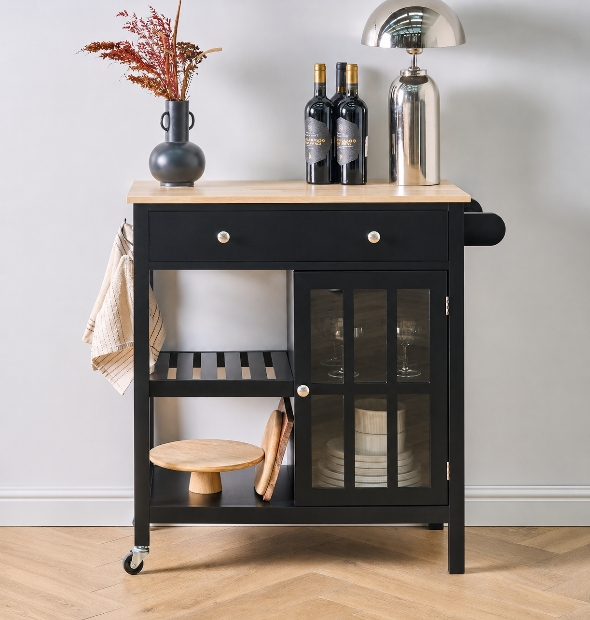
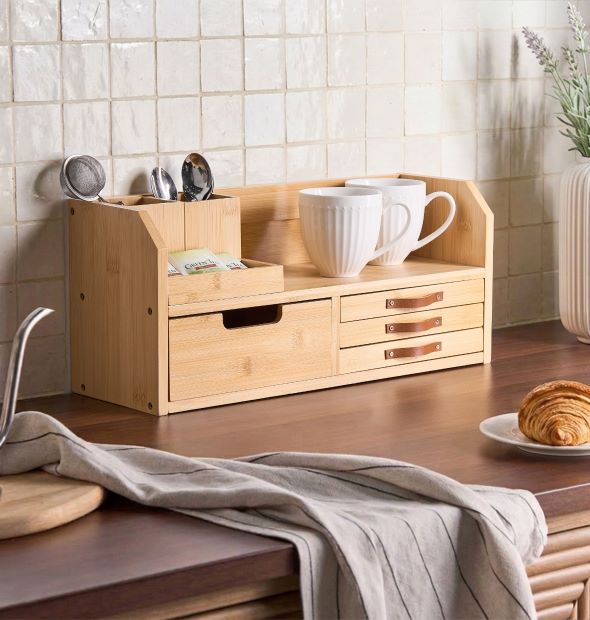
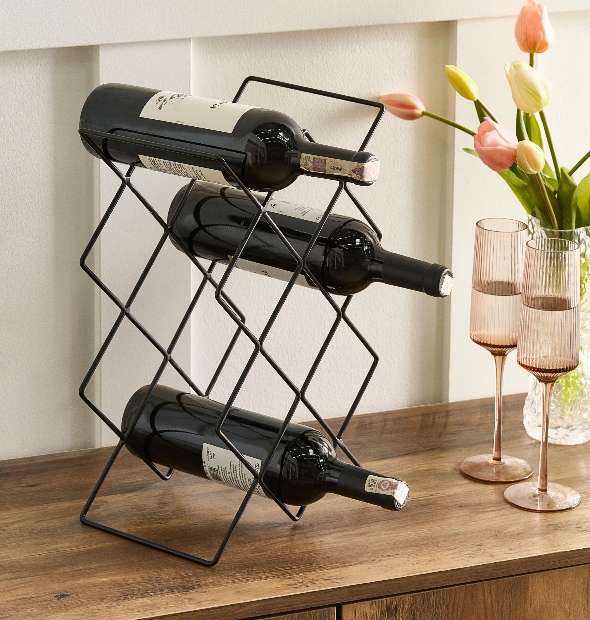
Shop now: products in the pictures
Small kitchen? Make every centimetre count
In a small kitchen, every surface earns its keep twice over, so vertical and multi-purpose storage matter more than in a larger room.
- Fix a magnetic strip or rail to a wall for knives and utensils instead of a countertop block
- Use the inside of cabinet doors for lids, cling film or cleaning spray
- Pick a narrow trolley or slim shelving unit that fits a gap too small for a full cabinet
- Store flat items such as trays and chopping boards upright in a slot rather than stacked flat
Read more: how to arrange small spaces
How to organise a kitchen combined with a dining area?
When a kitchen and dining area share one room, keep the table out of the direct route between the fridge, sink and hob, so people walking to and from the table aren't crossing the cook's path mid-meal. Leave at least 90 cm of clear floor behind each dining chair where that space doubles as a walkway, so someone can get past a seated diner without everyone pulling their chairs in.
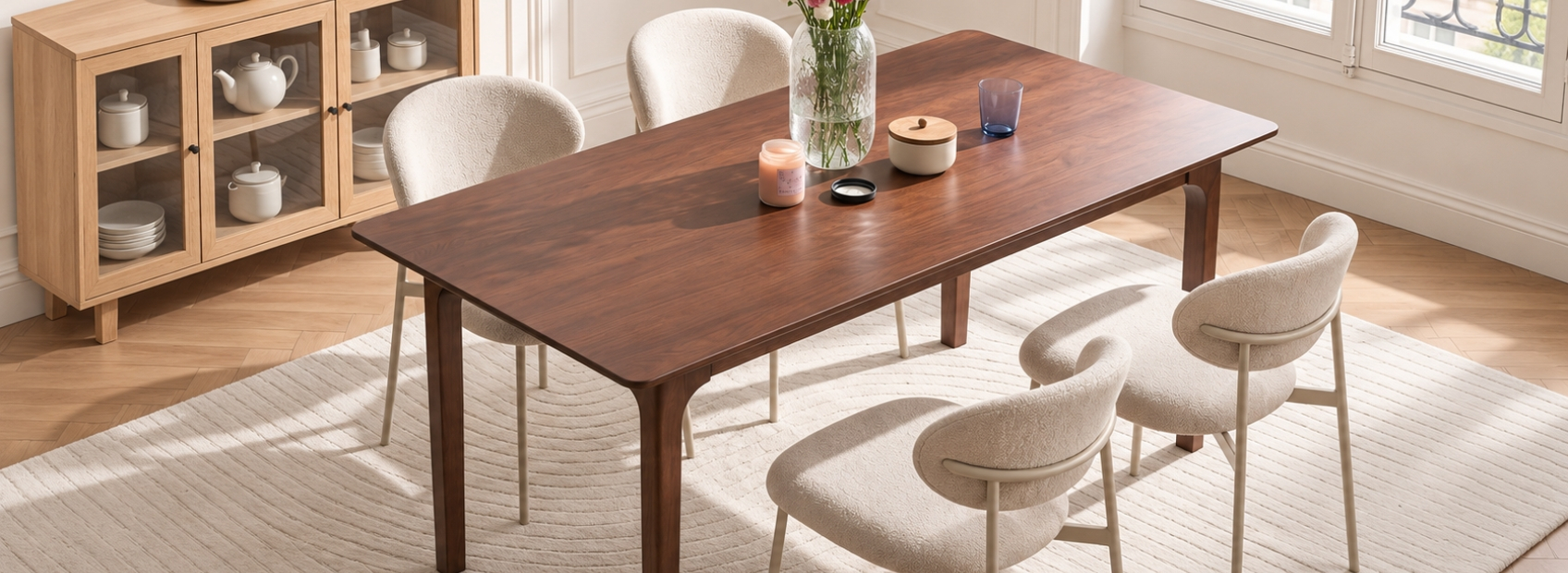
Store everyday crockery, glasses and table linen in a cabinet or sideboard near the table rather than back in the main kitchen run, so laying and clearing the table doesn't mean carrying everything across the room. The same piece gives you somewhere to keep things used only occasionally, such as serving platters or a tablecloth, without eating into kitchen cabinet space.
Shop now: products in the pictures
Kitchen organisation hacks
A few small habits keep a kitchen organised long after the initial sort, without needing extra furniture.
- Fit drawer dividers or small trays, so cutlery, utensils and gadgets stay separated instead of sliding into one mixed pile
- Decant dry goods into clear, stackable containers, which shows stock at a glance and takes up less shelf depth than the original packaging
- Add a turntable to deep corner cabinets, so items at the back are one turn away rather than a reach-and-search
- Label shelves or boxes in a shared kitchen, so everyone puts things back in the same spot
- Keep a small bin by the worktop for anything you decide to get rid of while unpacking shopping, rather than waiting for the next big clear-out
- Store cutlery in a drawer insert that separates each type, so a full set can be lifted out in one go when laying a table
- Stack dinnerware by size, with everyday plates and bowls at the front of the stack rather than the back
- Keep glassware in a single layer rather than stacked, since stacked glasses chip more easily and take longer to separate
Frequently asked questions
What is the kitchen work triangle?
The kitchen work triangle is the layout formed by the sink, hob and fridge, the three points used in almost every meal. Keeping these close together, usually within a few steps of each other, cuts down on wasted movement while cooking.
How often should you clear out kitchen cupboards?
A full clear-out once a year is enough for most kitchens, since that catches expired food, duplicate gadgets and items that have quietly stopped being used. A quick check every few months stops a cupboard filling back up in between.
Do you need a separate pantry to store food well?
No, a dedicated cupboard, a tall cabinet or even a shelving unit in a utility space can do the same job as a pantry. What matters is giving food its own zone rather than mixing it in with cooking equipment.
How do you stop a kitchen drawer turning into a junk drawer?
Give the drawer one clear purpose, such as takeaway menus and spare batteries, rather than leaving it open-ended. A drawer divider or small tray also stops loose items sliding around and merging into one pile.
Where should pots and pans be stored?
Pots and pans belong in the cabinet or drawer closest to the hob, ideally one you can reach without bending further than a shallow cupboard. A deep drawer with a divider usually works better than a low cupboard, since you can see and lift pans straight up rather than digging to the back.