Free Delivery & Return
 365-Day Returns
 10 Million Happy Customers
 500,000 Products in Stock

The Practical Bedding Guide: Fabrics, Fit, and Essentials Explained
Reviewed by the Beliani Content Team · Updated November 2026
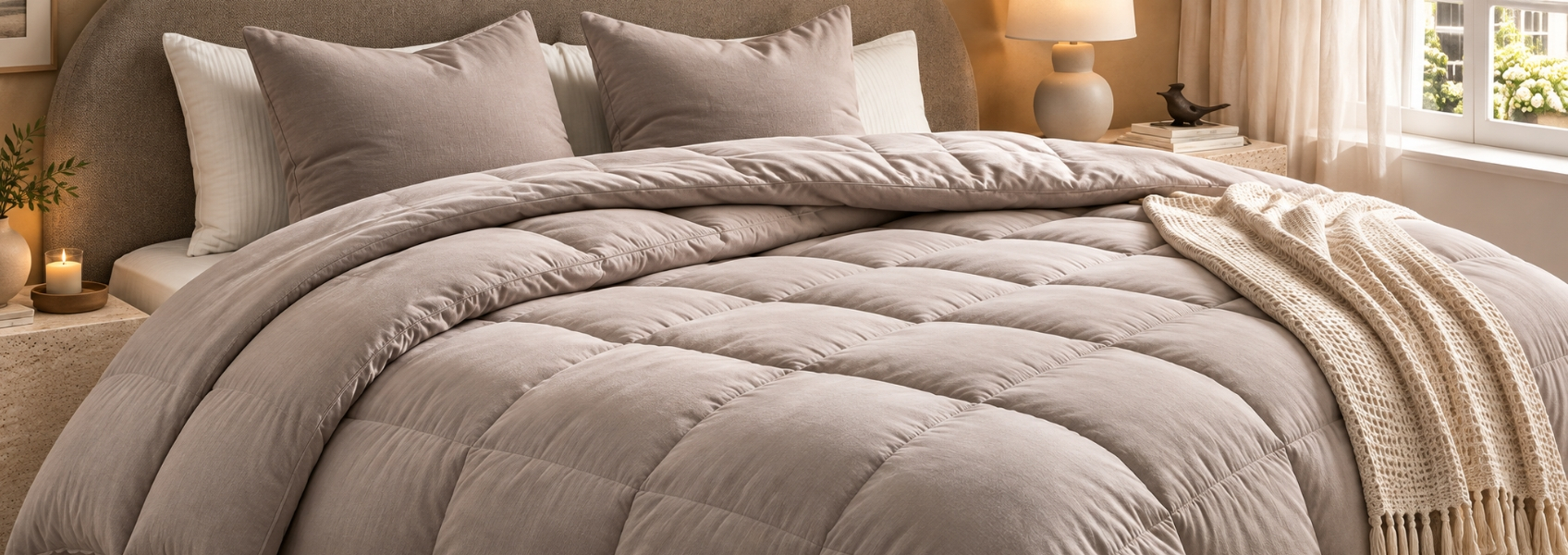
Bedding is one of the few things in your home you spend around eight hours a day touching, yet most people choose sheets by colour and duvets by price alone. The fibre a sheet is woven from, the weave that gives it its look and feel, and the exact fit of your sheets and duvet all affect whether you wake up comfortable or tangled and too hot. This guide walks through the fabrics, finishes and sizing details that genuinely change how bedding performs, so you can match your choice to your bed and the season.
In short
Which bedding fabric is best?
Cotton percale is the most reliable all-round choice, since it is breathable, durable through repeated washing, and suits most climates and sleepers. Linen beats it for hot or humid nights and a relaxed texture, while sateen cotton or lyocell suit anyone who wants a softer, silkier feel against the skin. There is no single best fabric, since the right one depends on a few things that vary from person to person.
- How warm or cool you sleep at night
- Your local climate and the season
- How much ironing or special washing you're willing to do
- Your budget per set
Which bedding material is best for you?
Whether you are buying sheets, duvet covers, or pillowcases, your fabric choice determines how cool you sleep and how easy your laundry routine will be. Use the guide below to compare the five main bedding materials, from breathability to daily care.
| Material | Feel | Breathability | Care | Best for |
|---|---|---|---|---|
| Cotton (percale or sateen) | Crisp and matte, or smooth and lustrous | High | Machine washable, softens with each wash | Most sleepers and climates |
| Muslin (usually cotton, sometimes linen or silk) | Soft, lightweight and slightly textured, gets softer with every wash | Very high | Machine washable, may shrink slightly on the first wash | Hot sleepers, babies and sensitive skin, summer bedding |
| Linen | Textured, relaxed, slightly crisp | Very high, moisture-wicking | Machine washable, wrinkles easily, best on a lower heat | Hot or humid sleepers, warm climates |
| Lyocell | Smooth, silky drape | High, good moisture absorption | Machine washable, handle gently to limit pilling | A silky feel with good temperature control |
| Viscose (incl. bamboo viscose) | Soft, silky | Good, moisture-wicking | Machine washable, check the label for heat limits | A budget-friendly silky alternative to lyocell |
| Microfibre or polyester | Smooth, lightweight | Lower, traps more heat | Very easy care, wrinkle-resistant, dries quickly | Budget bedding and easy-care households |
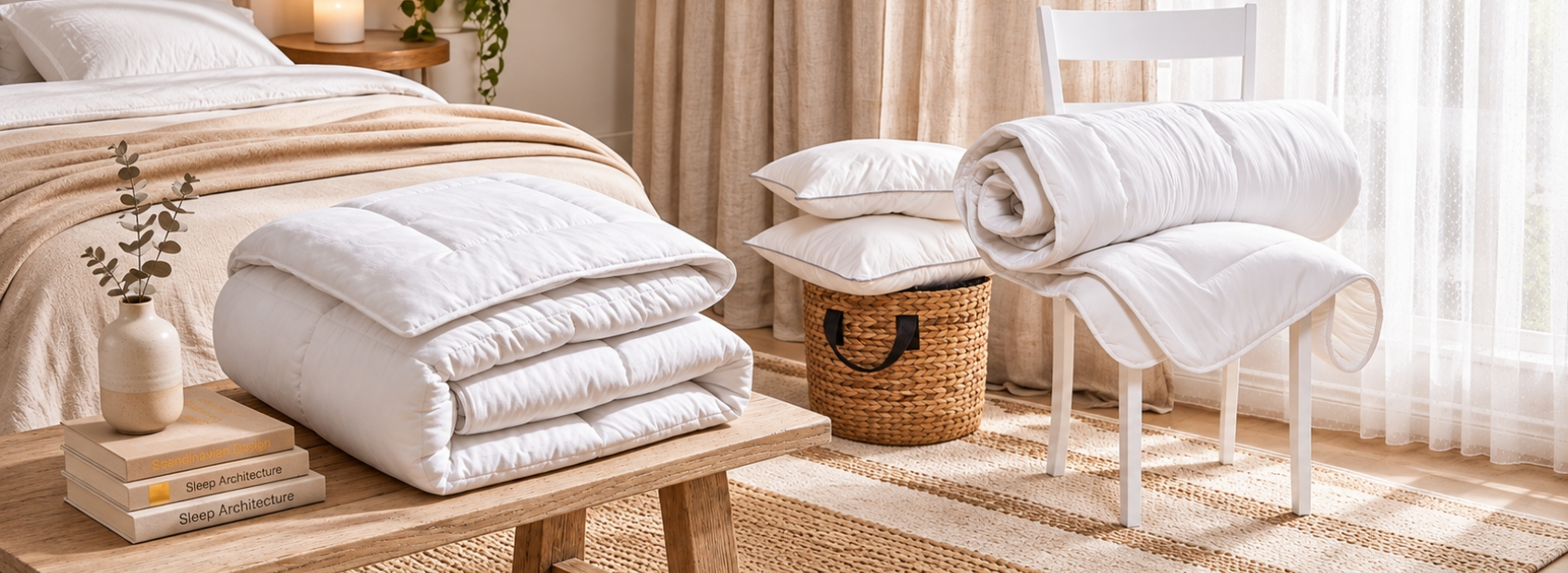
Natural or synthetic duvets: which should you choose?
Down and feather duvets and polyester duvets solve the same problem in different ways, and the right pick usually comes down to how you want to live with the duvet day to day, rather than which one is objectively better.
Warmth with less weight
Natural fill (down and feather)
A natural fill traps more warmth for its weight than any synthetic alternative, so a down duvet feels lighter on the bed for the same tog rating. It also tends to outlast synthetic fills by years when cared for properly, though it usually costs more upfront and needs specialist or delicate washing rather than a quick spin at home.
Easy care & allergy-friendly
Synthetic fill (polyester or hollowfibre)
A synthetic fill is fully machine washable at home, dries faster, and is the safer pick for allergy sufferers since it avoids animal-derived materials entirely. It costs less to buy, though it compresses with use and generally needs replacing sooner than a well-cared-for natural duvet to keep the same warmth and loft.
How should fitted sheets fit your bed?
Three fitting styles cover most sheets on the market, and for a standard bed frame, an elasticated fitted sheet is usually the best all-round choice.
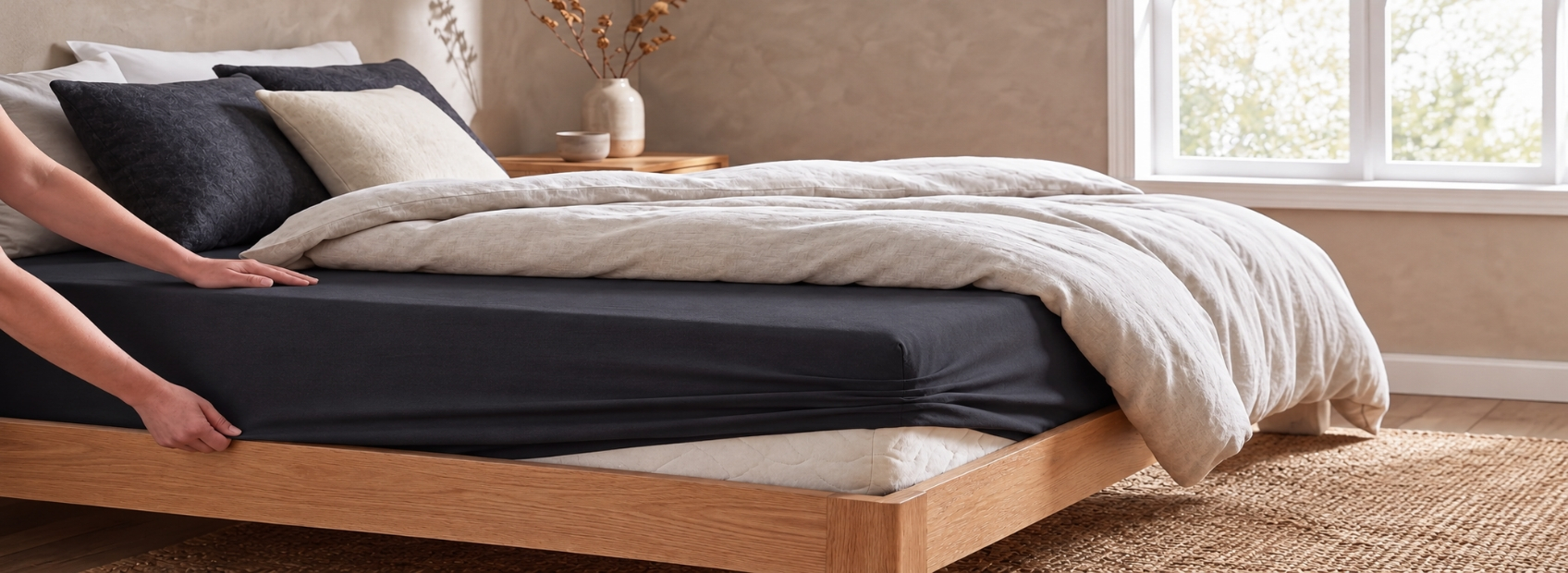
Need a sheet update? Get the featured sheet
All-round pick
Elasticated fitted sheet
Elastic stitched around the hem pulls the fabric taut over the mattress and keeps it in place overnight. It fits a standard rectangular mattress snugly and is the easiest style to put on and take off.
Most flexible
Flat sheet
A flat sheet has no elastic and is tucked in by hand instead. It works on mattresses that don't match a standard rectangular shape or depth, though it needs retucking more often than a fitted sheet.
Best for adjustable beds
Strap-fit sheet
Elasticated straps or clips fitted underneath the corners, rather than a full elasticated hem, hold the fabric flat across hinges and joins. This makes it the better choice for adjustable or profiling bed bases that fold in the middle.
Match your sheet size to your mattress
Mattress sizes carry standard names, such as single, double, king and super king, but the exact measurement behind each name differs from one country to another, and sometimes between brands within the same country. Always check your mattress's own label or your original purchase details for its measurements in centimetres, and match the sheet to that figure rather than to the size name alone.
A sheet also needs enough pocket depth to stretch over the mattress from top to bottom. Standard fitted sheets typically suit mattresses up to around 25–30cm deep, deep-fitted sheets stretch to around 30–40cm, and extra-deep sheets cover mattresses up to about 40–46cm. Measure your mattress at its thickest point, including any topper, before ordering, since a pocket that's too shallow will pop off the corners overnight.
Shop now: bed sheets
Duvets: which fill and tog rating do you need?
Duvets are filled with either natural or synthetic material, and the fill affects warmth, weight and care. Natural down and feather fillings trap more warmth for their weight and compress into a higher loft, but they cost more and often need specialist cleaning. Synthetic hollowfibre or microfibre fillings are fully machine washable and generally hypoallergenic, though they need a thicker fill to match the same warmth as down.
Tog – short for Thermal Overall Grade – measures thermal resistance, or how effectively a duvet traps heat rather than how heavy it feels. The scale runs from 1.5 (coolest and lightest insulation for hot summer nights) to 15 (warmest for freezing winter conditions). These bands are a general guide rather than a regulated standard, since exact ranges vary a little between manufacturers across Europe.
Winter duvets
Room Temp: 17°C or below
12–15 TOG/ Extra warm duvets
Spring & Autumn
Room Temp: 18°C–21°C
7–10.5 TOG/ Medium warm duvets
Summer
Room Temp: 22°C and above
Up to 4.5 TOG/ Light warm duvets
All-season duvet
A combination duvet – often called an "all-season" duvet – pairs two separate duvets of different weights using poppers or ties. Rather than relying on rigid temperature categories or traditional rating systems, this versatile setup lets you use the lightweight duvet during summer, the medium-weight option for spring and autumn, and join both together for maximum warmth during cold winter months.
Which weave gives a duvet cover its look, feel, and warmth?
Fabric is what your duvet cover is made of – weave is how it actually feels on your bed. While the fibers set the material, the weave determines if it’s crisp, silky, stretchy, or extra warm. Here are the 4 main types you'll find:
Crisp & cool
Percale
A plain, one-over-one-under weave that gives a matte finish and a crisp hand feel. It's breathable, cools quickly against the skin, and resists pilling, which makes it a good year-round choice.
Smooth & silky
Sateen
More threads sit on the surface of this weave, giving a soft sheen and a silky drape. It feels slightly warmer than percale and drapes beautifully, though it can pill and show snags a little more easily.
Casual & stretchy
Jersey
Knitted rather than woven, so it stretches like a soft t-shirt. It's casual, breathable and easy to fit, though it looks less crisp and holds fewer sharp lines than a woven sheet.
Warm & brushed
Flannel
Cotton with a brushed, napped surface that traps warmth close to the body. It's heavier and less breathable than percale, which makes it a better match for cold bedrooms and winter nights.
Duvet cover closures: zip, poppers or buttons
How a duvet cover fastens affects how quickly you can change it and how well it keeps the duvet in place inside.
| Closure | Ease of fastening | How securely it holds | Look |
|---|---|---|---|
| Zip | Fastens in one quick motion | Holds very securely, rarely works loose | Clean, minimal look |
| Poppers | Quick, and forgiving if slightly misaligned | Secure for most use, though can undo if the duvet shifts a lot | Casual, practical look |
| Buttons | Slower, since each button fastens individually | Reasonably secure, though a missed button leaves a gap | Classic look, often used on more decorative covers |
| Ties only | Quick but fiddly to tie evenly | Least secure of the four, duvet can bunch inside over time | Minimal, simple look |
Match your duvet size to your mattress size rather than your sheet size alone, since a duvet needs a bit of overhang on each side to stay tucked in without slipping off a shared bed.
Shop now: duvets and comforters and duvet covers
How to dress your bed for each season
Bringing together fabric, weave and tog rating by season makes it easier to decide what to change as the weather turns, rather than treating each choice in isolation.
Winter bed setup for maximum warmth
Brushed cotton or flannel sheets trap warmth close to the body, and pairing them with an extra warm duvet – or joining both halves of a combination duvet – suits most cold bedrooms. A wool or fleece throw adds an easy extra layer on especially cold nights without needing an even heavier duvet.
Balanced autumn bedding for shifting temperatures
A medium-warm duvet works best for most autumn bedrooms, paired with a cotton percale or sateen sheet that isn't too warm on milder days. This is also when a combination duvet earns its keep, since you can easily detach its lighter half as temperatures shift.
Light spring fabrics for milder weather
Spring calls for a similar medium warm rating as autumn, but a lighter, more breathable sheet – such as percale or lyocell – suits the milder and more variable days typical of the season. Keep a spare blanket nearby for any unseasonably cool nights rather than switching to a heavier duvet.
Cool summer options for hot nights
Linen or percale cotton sheets stay coolest in summer, since both breathe well and wick moisture away from the skin. Pair them with a light warm duvet, or swap the duvet for a cotton blanket or a simple top sheet on the warmest nights.
Bed pillows: what to know before you buy
Pillow fill works the same way as duvet fill. Down and feather give a soft, mouldable loft, memory foam gives firm, contoured support, latex offers a naturally resilient and breathable alternative to memory foam, and synthetic hollowfibre is the easy-care, budget option. The right loft depends heavily on sleep position, since a pillow that works well for one position can leave another badly misaligned.
Pillow sizes vary by brand, so check the stated dimensions against your bed width rather than assuming a size name matches across brands; the aim is to fit two pillows side by side across a double, king or super king without gaps. Pillows also lose their shape and hygiene over time, so most sleep guidance suggests replacing a pillow roughly every one to two years, sooner for a well-used down or synthetic pillow.
Read more: choosing the perfect sleeping pillow
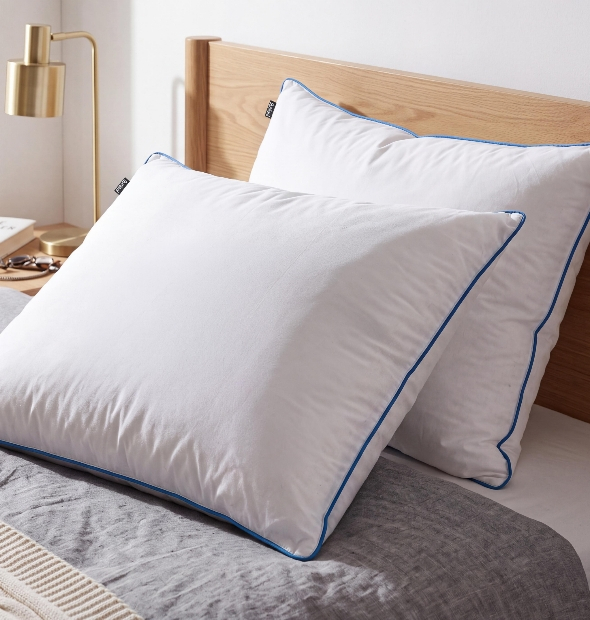
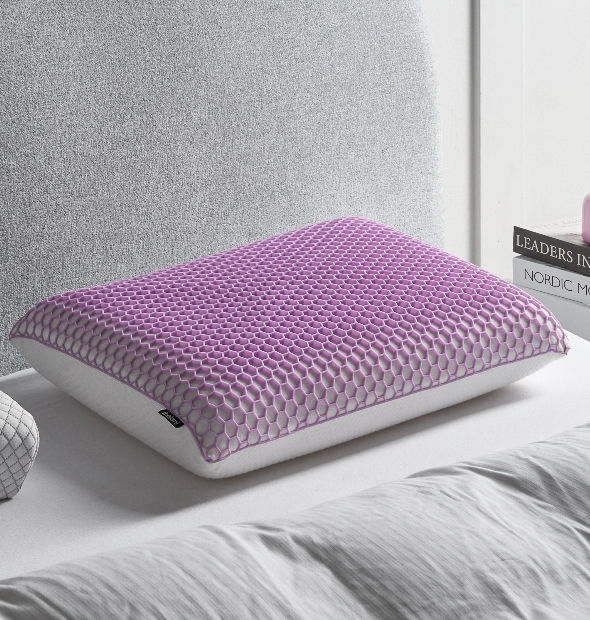
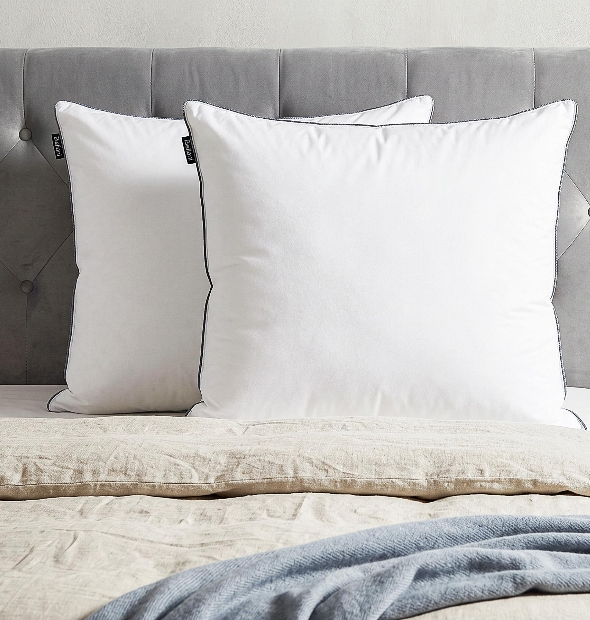
Looking for a new pillow? Shop our favourites or browse all bed pillows
How to keep your bedding fresh and long-lasting
A few simple habits make a bigger difference to bedding than the fabric itself.
- Hygiene first: When extra cleanliness matters, wash your bedding at 60°C – this temperature effectively removes dust mites and bacteria from your sheets and pillowcases.
- Dry immediately after washing: Don't leave damp bed linen piled in a heap, as this quickly leads to mould growth and unpleasant musty smells.
- Fold, don't crumple: Neatly fold your bedding before putting it away in the cupboard – this prevents stubborn creases and makes it far easier to find the complete duvet set.
- Ironing cotton sateen: If you want to maintain sateen's beautiful sheen, ironing is recommended, as creases show up much more visibly on it than on matte percale.
- Check the care label (linen & lyocell): Before washing, drying, or ironing linen or lyocell at high temperatures, always check the care instructions – these natural and cellulosic fibres require far gentler cycles and lower heat settings than standard cotton.
What to check before buying bedding
Once you know the fabric and tog rating you want, run through this list before you add anything to your basket.
- Mattress depth measured at its thickest point, against the fitted sheet's pocket depth
- Mattress dimensions checked on the product listing itself, since the same size name can mean different measurements between brands and countries
- Tog rating matched to the season and room you sleep in most
- Fabric and weave matched to how warm or cool you sleep at night
- Fill type checked against any allergies before buying a duvet or pillow
- Duvet cover closure checked against how often you plan to change the cover
- Pillow firmness matched to your sleep position, and size matched to your bed width
Frequently asked questions
Does a higher thread count always mean a better sheet?
No. Exceptionally high numbers on labels often serve mainly marketing purposes, as they are artificially inflated by counting multi-ply yarns as individual threads. The quality of the cotton fibres and the weave type have a much greater impact on softness and durability than high figures on the package.
Does a lighter duvet cover make a winter duvet cooler?
No. The cover material does not alter the insulation level or thermal performance of the duvet. If you feel too hot under a winter duvet, it is better to switch to a lighter, thinner duvet overall rather than relying on a thinner cover.
How often should bed sheets be washed?
Washing sheets once a week is a reasonable default for most households, and more often if you sleep hot, have pets on the bed, or have allergies. Duvets and pillows need washing far less often, typically every few months, provided they are kept inside a cover and a pillowcase.
Can linen sheets go in a tumble dryer?
Most linen sheets can be tumble dried on a low heat setting, though line drying helps the fibres keep their texture for longer. Always check the care label, since some linen blends are more heat-sensitive than pure linen.